Why Accounting Firms Face an IT Crossroads
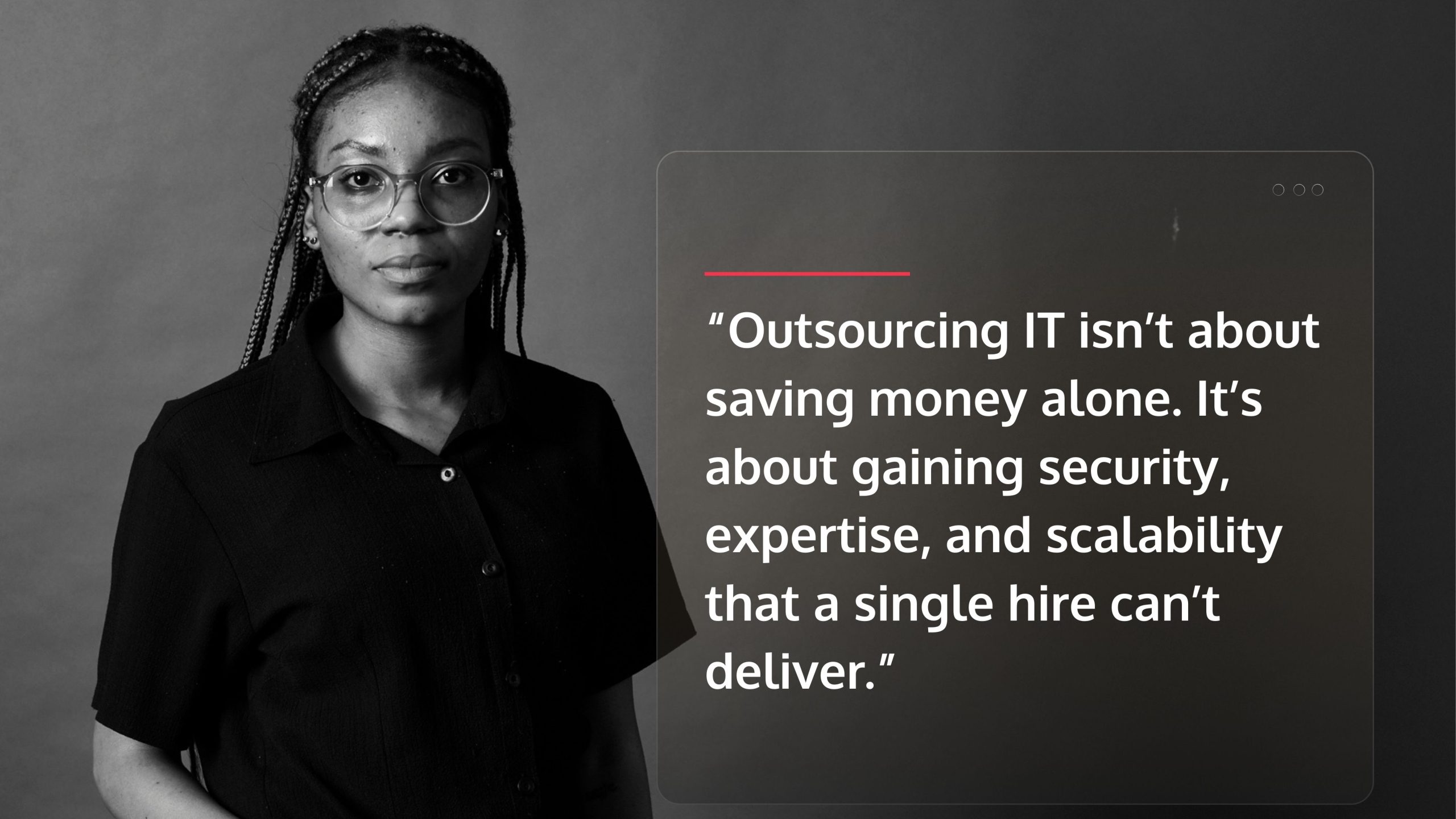
Accounting firms outsource IT to access specialized expertise, cut total costs by 30–50%, ensure 24/7 security, and scale during tax season, all while avoiding the risks of hiring in-house.
The core reasons are:
- Cost Control: Avoid salaries, benefits, and turnover by paying a predictable monthly fee.
- Deep Expertise: Access cybersecurity, cloud, and AI specialists without hiring them individually.
- Security & Compliance: Meet GLBA, IRS, and state data mandates with proactive monitoring.
- Scalability: Add users and services during busy seasons without long-term commitments.
- Client Focus: Let IT experts handle infrastructure while CPAs focus on billable work.
The accounting profession faces a perfect storm. Regulatory demands are expanding. The talent pipeline is shrinking. Technology complexity is exploding.
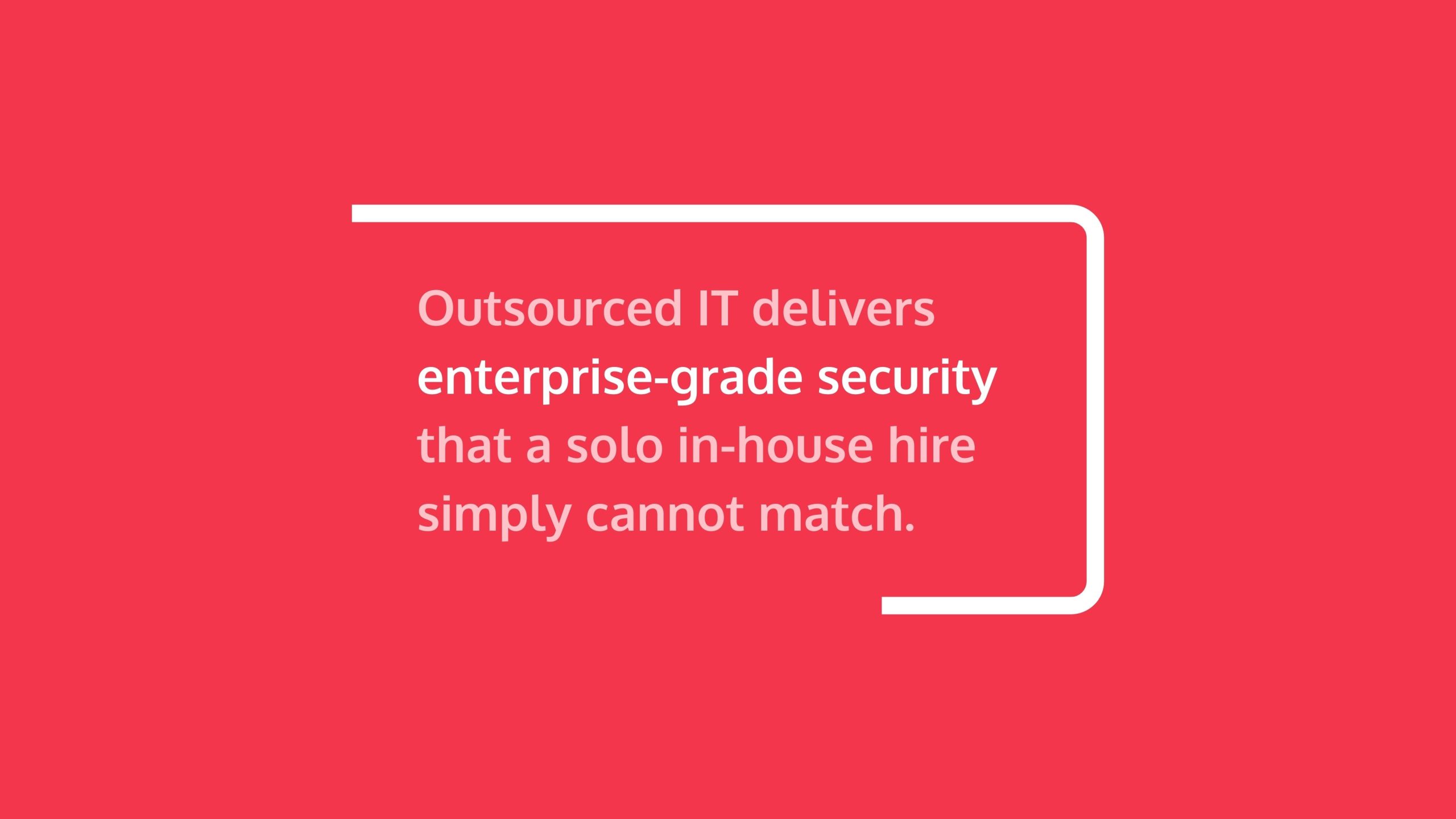
Cybercriminals view accounting firms as high-value targets. Cloud platforms, AI tools, and advanced security are no longer optional. A single in-house IT generalist cannot manage enterprise-grade cybersecurity, 24/7 monitoring, cloud architecture, and helpdesk support at the same time.
This creates a clear choice. Hire internal staff and absorb the full cost of salaries, benefits, and turnover. Or partner with a managed IT provider and gain a full team with predictable pricing.
For most firms under 200 employees, strategic IT outsourcing is the stronger model. In-house IT worked when “IT” meant fixing printers. Today, it means defending against sophisticated cyber threats and integrating AI. That requires a team.
In the Houston metro area, including Katy, Sugar Land, and Conroe, competition for talent is fierce.
A mid-sized firm in Katy may need real-time dashboards for oil and gas clients. A Sugar Land practice must comply with GLBA and Texas data breach statutes. An in-house IT employee typically commands $80,000 to $100,000 in salary, plus benefits and recruiting costs, with a high risk of turnover.
An outsourced partner provides a full Security Operations Center (SOC), help desk, and compliance expertise for a fixed monthly fee.
I’m Orrin Klopper, CEO of Netsurit. For 29 years, I’ve helped hundreds of organizations, including accounting firms, deliver enterprise-class IT without the overhead of an internal department. The economics, expertise, and risk profile consistently favor the managed model.
Below, I’ll walk through the real numbers and strategic trade-offs to help you decide.
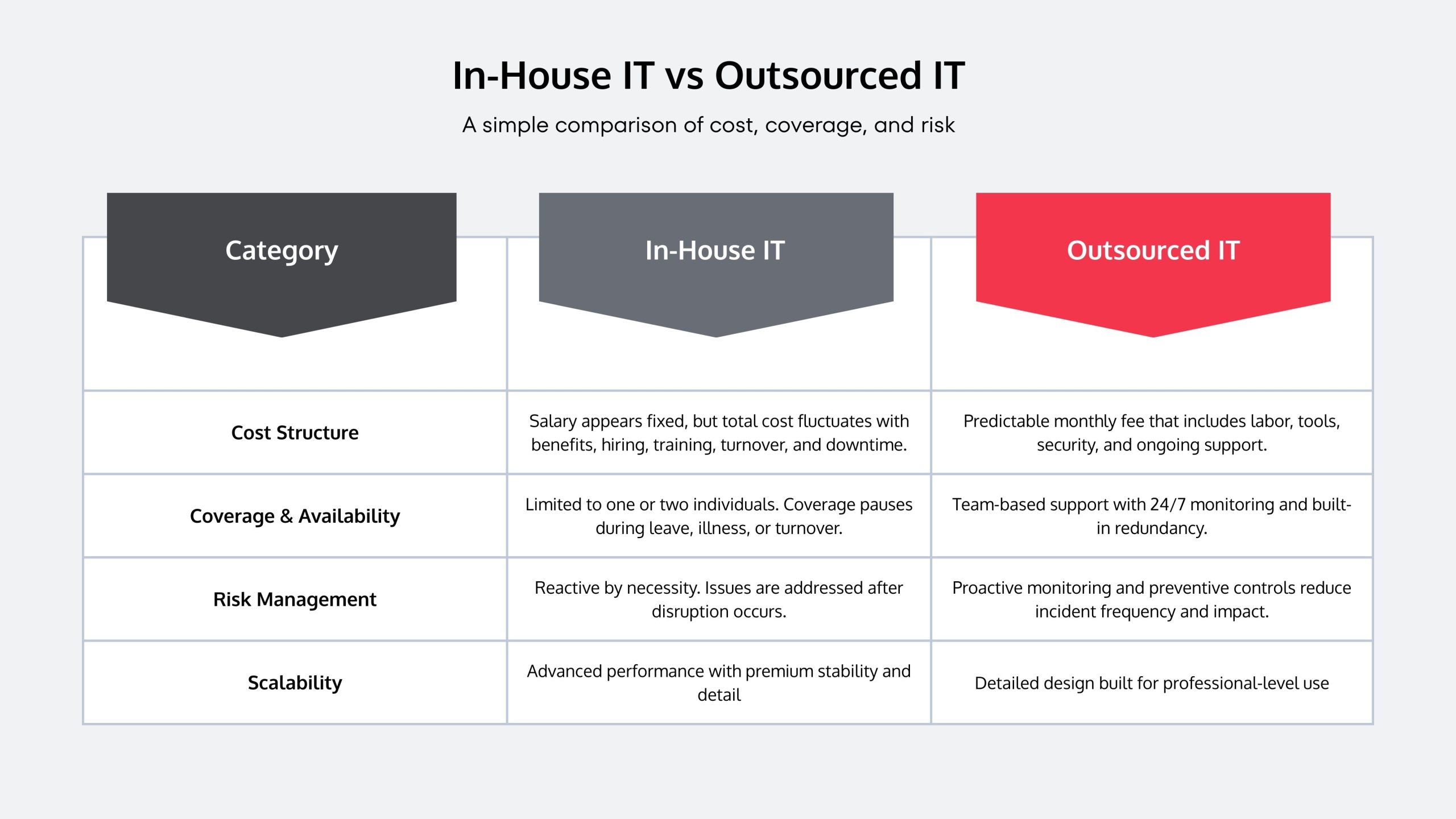
The Real Cost Equation: Beyond Salary to Total Economic Impact
Most firms start with salary comparisons. That’s a mistake.
A mid-level IT manager in Houston earns roughly $90,000 per year. But salary is only the beginning.
Health insurance, retirement matching, and payroll taxes push total compensation to $117,000–$126,000. Add recruitment fees of $13,500–$22,500, annual training costs of $5,000–$10,000, and tools costing $3,000–$8,000.
If that employee leaves after 18 months, which is the industry median, those costs repeat.
A Katy-based firm with 25 employees calculated the total first-year cost of a $90,000 IT manager at $171,000. This included:
- $126,000 in compensation
- $18,000 in recruitment fees
- $7,000 in training
- $5,000 in tools
- $15,000 in lost productivity during a three-month hiring gap
That figure did not include after-hours support, vacation coverage, or specialized projects.
By comparison, a managed IT services contract for a firm of that size typically costs $36,000–$72,000 annually.
That fixed fee covers a full team, 24/7 monitoring, compliance support, and enterprise-grade security tools. It also converts unpredictable capital expenses into predictable operating expenses.
Why Outsourcing Controls Costs Better
Outsourcing removes the hidden costs of employment.
There are no sick days, no vacation gaps, and no single point of failure. MSPs spread the cost of expensive security platforms and specialized staff across multiple clients.
They also handle vendor management, freeing your team from negotiating with software publishers and internet providers.
The Trade-offs of In-House IT Costs
Outsourcing is not always the right fit.
A large firm with more than 200 employees and highly customized systems may benefit from a dedicated internal IT department.
Even then, costs add up quickly.
A Sugar Land firm with 180 employees found its three-person IT team cost more than $545,000 annually. By shifting to a hybrid model, one internal coordinator supported by an MSP, they reduced costs to $310,000 while improving security.
For smaller firms, a single IT generalist is usually reactive. Strategic projects stall. A ransomware incident or major outage can wipe out the annual IT budget in days.
Summary:
- Works best when: Fewer than 200 employees, need specialized expertise, predictable costs matter
- Avoid when: Proprietary systems require daily internal oversight
- Risks: Loss of control, poor service from the wrong partner
- Mitigations: Vet MSPs carefully, demand clear SLAs, verify SOC 2 Type II reports, and hold regular reviews
Accessing an Arsenal of Expertise and Advanced Technology
Modern IT is no longer a one-person role.
A secure accounting firm requires cybersecurity expertise, cloud architecture, AI integration, and compliance auditing. No single hire can cover all of it.
Outsourcing provides immediate access to certified cybersecurity analysts, cloud architects, and AI specialists.
Research shows 90 percent of firms must look outside their organization to capitalize on advanced technology. A standard 9-to-5 employee cannot provide 24/7 monitoring or rapid incident response.
When an attack happens at 2 a.m., an outsourced SOC is already responding.
MSPs also make enterprise tools like EDR and SIEM affordable by sharing costs across clients. Harvard Business Review describes this shift as the move toward an “external talent cloud.”
Staying Ahead of the Technological Curve
Technology moves fast. AI is now practical for fraud detection and automated reconciliation.
A Conroe-based firm attempting to deploy an AI audit tool would struggle with API integrations, data mapping, and training using a generalist. An outsourced partner with AI specialists can manage the rollout end to end and ensure ROI.
MSPs also take a proactive role, monitoring performance, identifying risks, and advising on emerging models like zero-trust security.
The Talent Shortage Is Not Going Away
The accounting profession faces a long-term talent shortage.
Eighty-four percent of CFOs cite talent shortages as a top concern, and the AICPA has stated the pipeline is “unlikely to recover soon.”
This shortage extends to IT roles. In Houston, competition drives up salaries and turnover.
Outsourcing sidesteps the problem. Firms gain immediate access to experienced teams without hiring risk or management overhead.
Fortifying Your Firm: Advanced Security and Compliance Through Outsourcing
Accounting firms are prime targets for cybercrime.
A breach can trigger financial loss, regulatory penalties, and long-term reputational damage.
Outsourced IT provides layered security. Firewalls. EDR. Continuous monitoring through a SOC. Regular vulnerability testing. Employee security training.
A Sugar Land tax firm avoided a reportable data breach when its outsourced monitoring blocked a phishing attack. That prevention avoided mandatory disclosure under Texas Business and Commerce Code §521 and protected client trust.
Meeting Complex Compliance Mandates
Accounting firms must comply with IRS rules, GLBA, and state data protection laws.
MSPs bring dedicated compliance expertise and often serve as a virtual Chief Information Security Officer. This ensures firms stay audit-ready without hiring an executive-level role.
Why Do Accounting Firms Outsource IT Instead of Hiring Staff for Scalability and Focus?
Accounting workloads fluctuate. Tax season surges. Quiet periods follow.
Outsourcing allows firms to scale IT support up or down without carrying excess staff.
This flexibility is critical during mergers or when opening offices in Houston or Conroe. MSPs can deploy infrastructure quickly while CPAs stay focused on advisory work and billable hours.
Risks of Outsourcing and How to Mitigate Them
Outsourcing risks exist.
- Risks: Poor service, hidden costs, security gaps
- Mitigations: Clear SLAs, accounting-specific references, SOC 2 Type II verification, and regular performance reviews
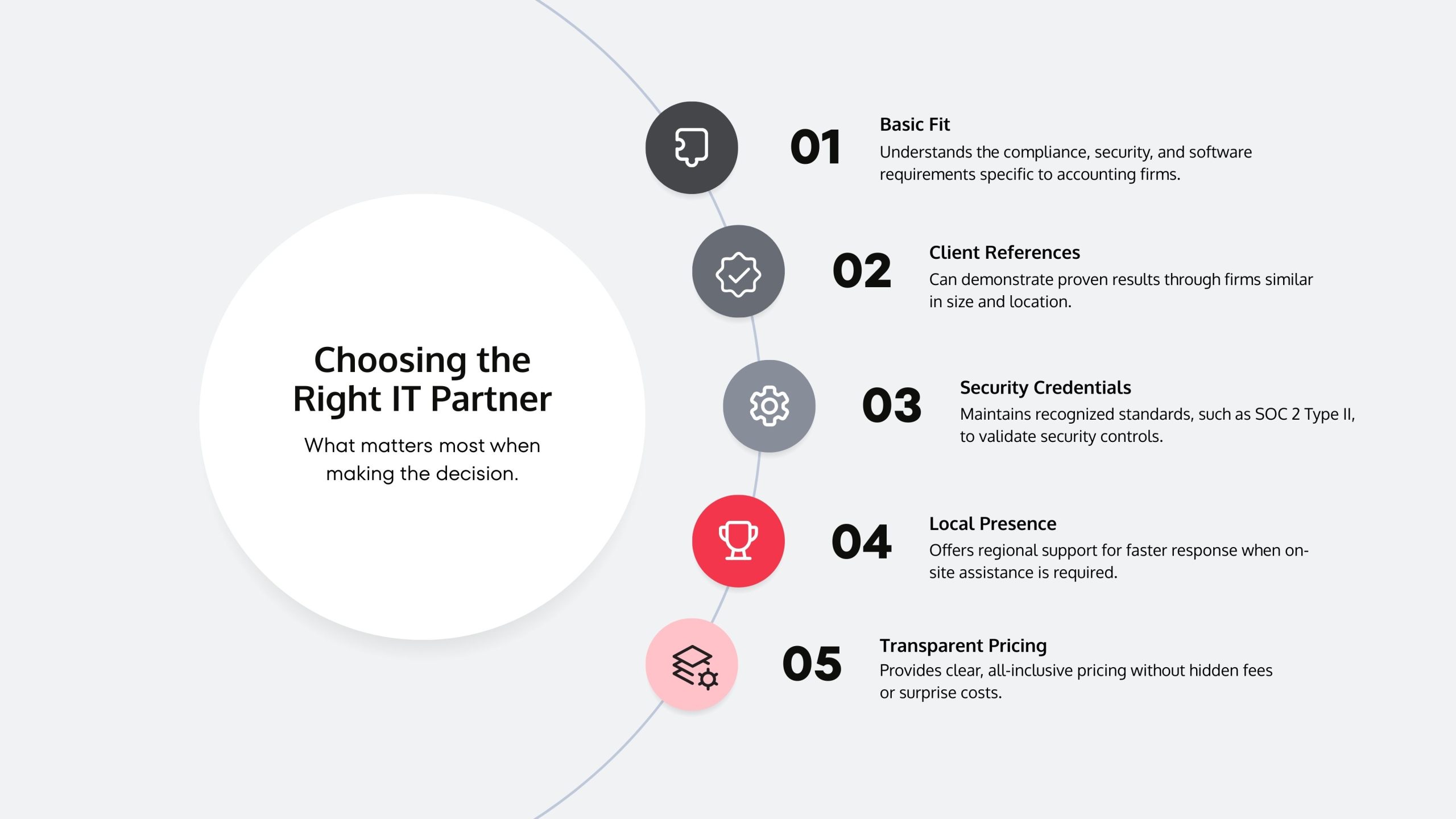
Key Considerations When Choosing an IT Partner
- Industry experience with accounting firms
- References from firms in Katy or Sugar Land
- Verified security credentials
- Houston-area presence
- Transparent pricing
- Cultural alignment
Frequently Asked Questions
How does an outsourced IT provider support accounting software?
Experienced providers support QuickBooks, Xero, NetSuite, Drake, and Lacerte. They handle updates, troubleshooting, and vendor coordination.
What happens if our firm grows or shrinks?
Outsourcing scales with you. Add users during expansion. Reduce costs during contraction. No excess capacity.
Is our firm too small to outsource IT?
No. Smaller firms benefit the most. Outsourcing delivers enterprise-grade security and expertise that small practices could never hire internally.
Conclusion
The answer to why accounting firms outsource IT instead of hiring staff is clear.
Outsourcing costs less. Delivers more expertise. Reduces risk.
Firms typically save 30–50 percent while gaining 24/7 security, compliance support, and access to advanced tools. CPAs stay focused on clients. IT becomes an advantage, not a burden.
For firms under 200 employees, strategic IT outsourcing is the superior model.
Ready to future-proof your firm?
Get IT services built for your accounting firm.