Why Accounting Networks Collapse When You Need Them Most
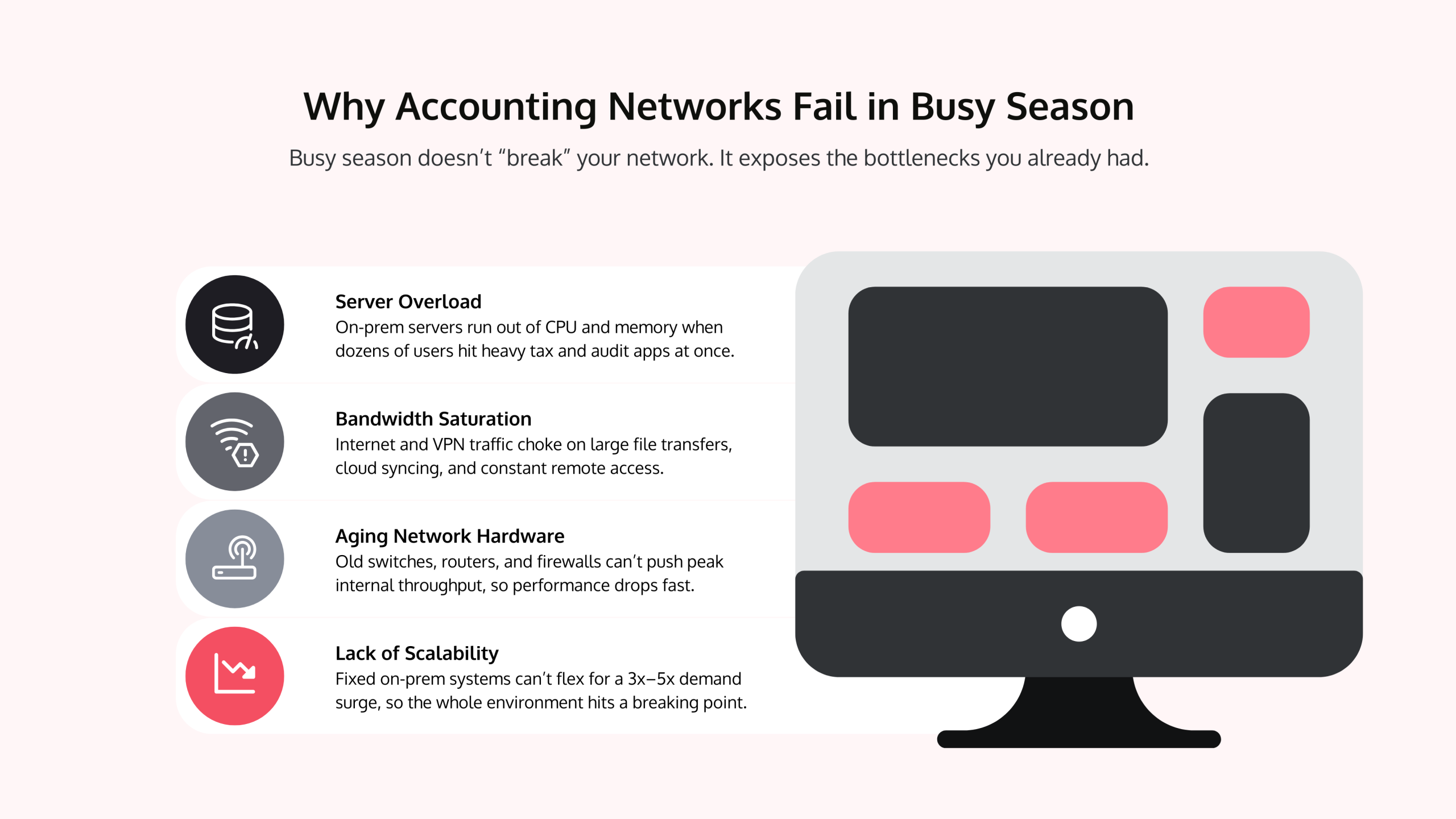
Why does our accounting firm network crash during busy season? Your IT infrastructure was built for an average workload, not the 3x to 5x demand surge that hits from January to April. These predictable failures stem from four bottlenecks:
- Server Overload: On-premise servers lack the CPU and memory for dozens of concurrent users running heavy tax and audit software.
- Bandwidth Saturation: Internet connections choke on massive file transfers, cloud syncing, and remote VPN traffic.
- Aging Network Hardware: Outdated switches, routers, and firewalls can’t manage peak internal data throughput.
- Lack of Scalability: Fixed on-premise systems cannot flex when demand spikes, creating a breaking point.
The cost is staggering. A 20-person firm can lose over $10,000 in billable time from a single four-hour outage. These failures also fuel burnout—a problem for 99% of accountants during busy season—and contribute to the talent exodus. For firms in the Houston metro area, including Sugarland, Conroe, and Katy, the shift to hybrid work models compounds the issue. An infrastructure that supported 15 in-office accountants now fails when 30 people try to access it remotely.
I’m Orrin Klopper, CEO of Netsurit. For 29 years, we’ve helped accounting firms build IT infrastructure that scales with demand to prevent downtime. The solution is a strategic approach to capacity planning, cloud migration, and network resilience.
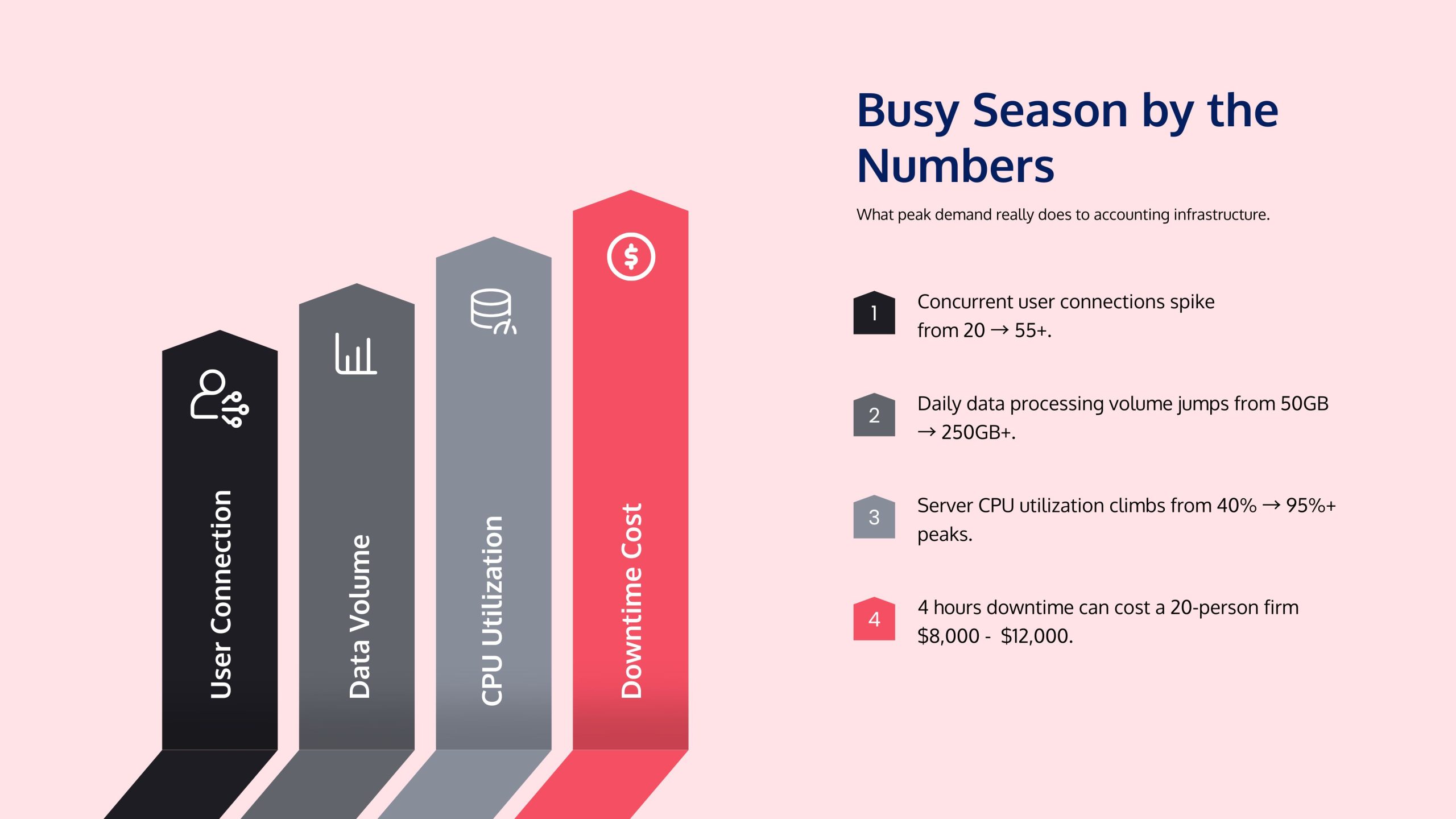
This infographic shows the busy season surge: user connections jump from 20 to 55+, data processing from 50GB to 250GB+, and server CPU utilization from 40% to 95%+ peaks that cause crashes.
Why Does Our Accounting Firm Network Crash During Busy Season? The Technical Breakdown
The answer to why does our accounting firm network crash during busy season is a simultaneous surge in users, data volume, and software intensity. An infrastructure that handles 20 users in the off-season buckles when 50 accountants work 60-hour weeks, accessing large tax files and running complex software. This digital traffic jam overwhelms servers, routers, and internet connections, causing files to open slowly, applications to time out, and systems to crash.
A 40-person firm in Sugarland, TX, lived this nightmare. Their on-premise server ran perfectly most of the year but suffered daily crashes during busy season. It couldn’t handle 40 staff simultaneously accessing multi-gigabyte audit files while running tax software, leading to system-wide freezes and lost billable hours.
What are the primary causes of accounting firm network crashes during busy season?
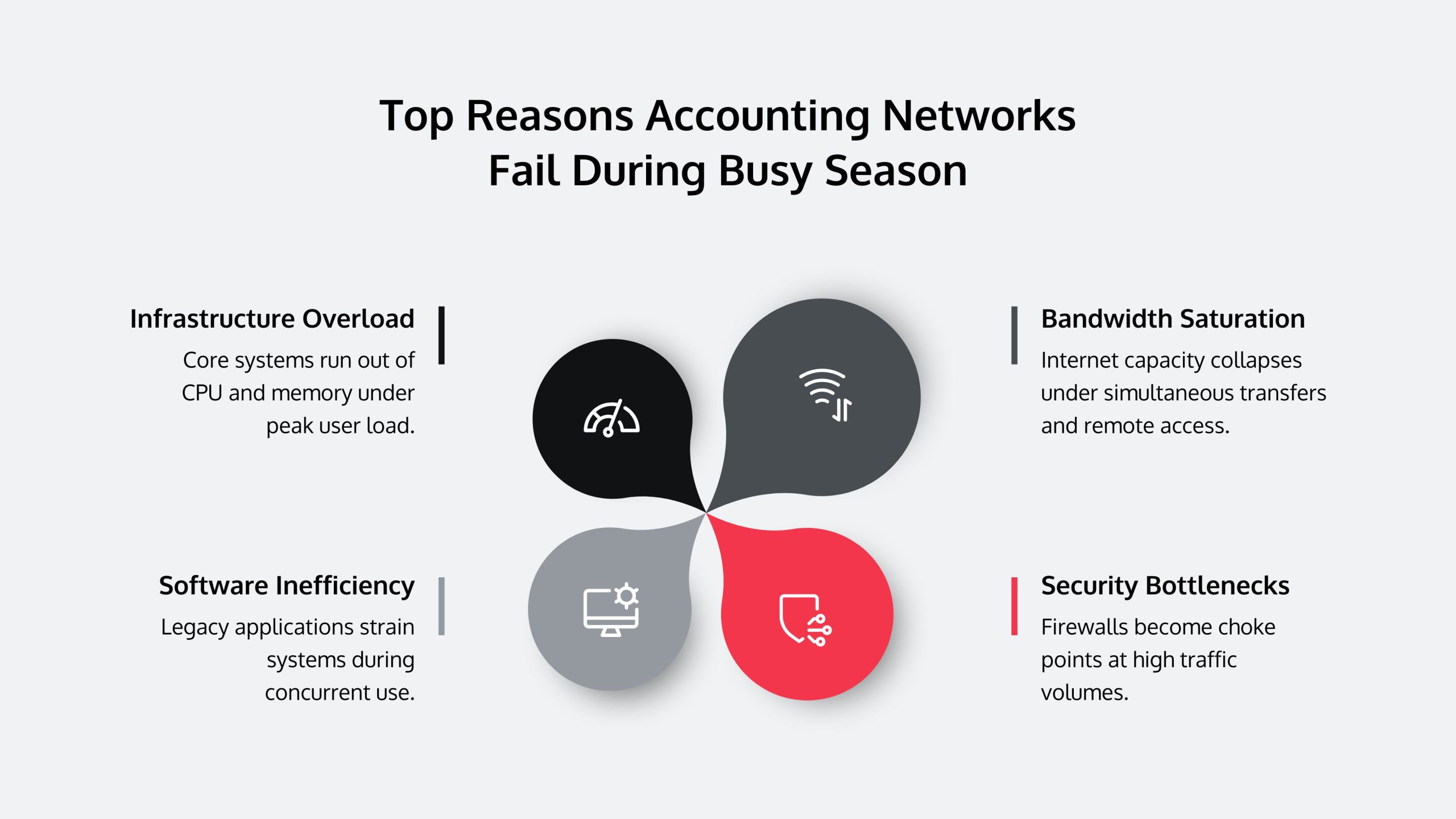
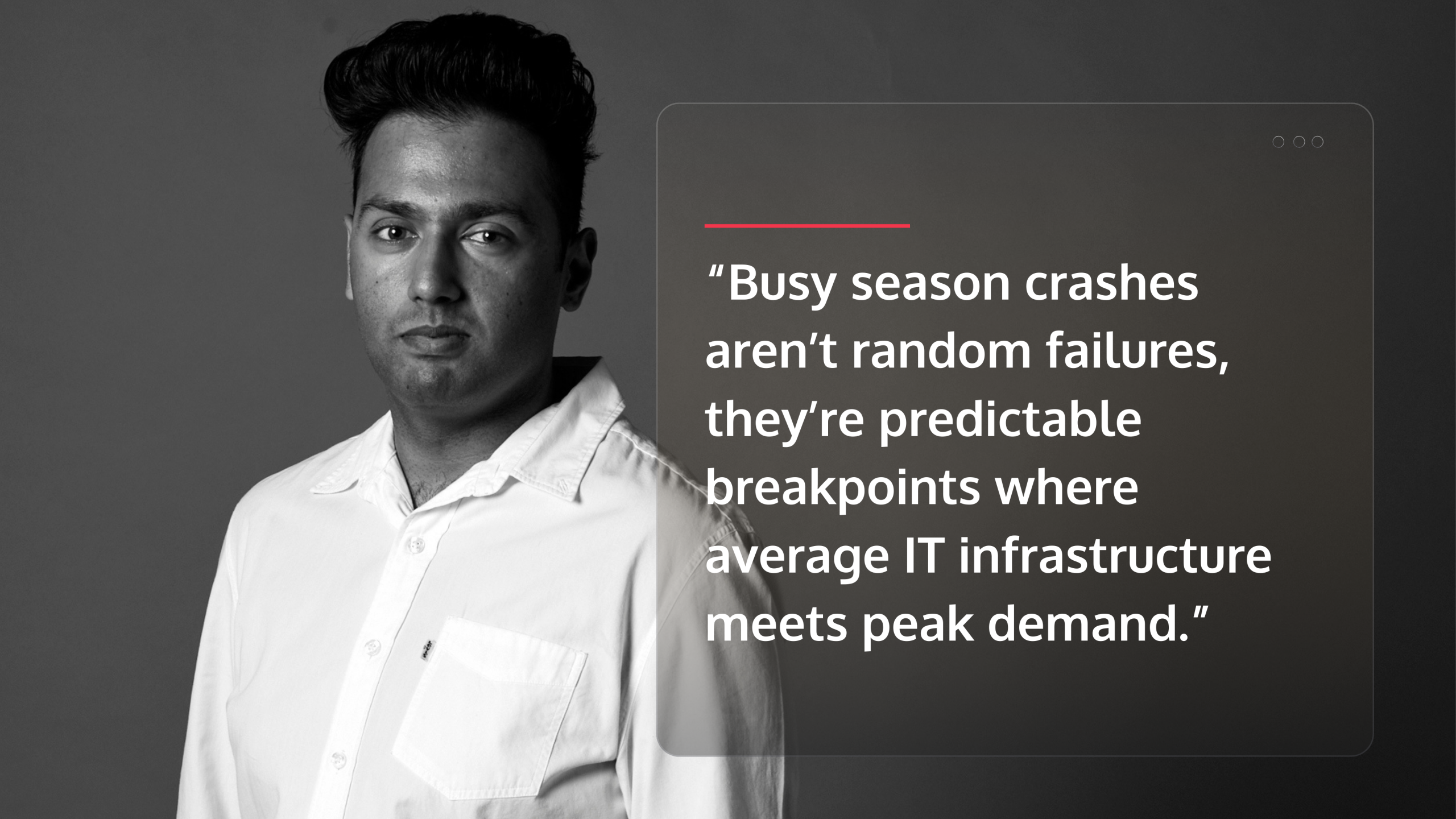
Crashes are the predictable result of technical limitations meeting peak demand.
- Infrastructure Overload: On-premise servers, firewalls, and switches lack the processing power and memory for dozens of simultaneous user requests. A server that is fine with 20 users will choke at 50, a frequent issue among Common IT Problems we see.
- Bandwidth Saturation: The internet connection is overwhelmed by large file transfers, cloud app syncing, and remote user connections all at once.
- Software Inefficiency: Legacy tax or accounting software, not optimized for modern network loads, consumes excessive resources and creates conflicts when multiple users access the same files.
- Security Appliance Bottlenecks: An undersized Network Security firewall struggles to inspect every data packet under heavy load, becoming a choke point that slows all traffic to a crawl.
How does increased data processing impact network infrastructure?
Increased data processing maxes out your hardware’s core components. Server CPUs hit 100% utilization, RAM fills completely, and storage drives can’t keep up with read/write requests. This creates extreme network latency, where opening a file takes minutes instead of seconds. Applications time out, files fail to save, and the system eventually crashes.
The danger extends beyond the crash itself. Abrupt shutdowns can corrupt tax returns, make audit files unreadable, and cause permanent data loss. Regular IT Audits and Assessments identify these bottlenecks before they halt your operations, allowing you to address capacity issues during your slow season.
Identify Your Weak Links: From Outdated Hardware to Insufficient Bandwidth
| Infrastructure Component | Off-Season Demand | Busy Season Demand | Typical Gap |
| Bandwidth | 50-100 Mbps | 300-500 Mbps | 3-5x increase |
| Server CPU/RAM | 40% utilization | 95-100% utilization | Maxed capacity |
| Concurrent VPN Users | 5-10 users | 25-40 users | 4-5x increase |
| IT Support Tickets | 10-15/week | 60-80/week | 5-6x increase |
Most accounting firms run on IT designed for their average workload. The problem is that busy season brings a 3x to 5x surge, causing networks that work perfectly in August to collapse in March. The only way to spot these weak links before they break is with an off-season assessment.
A firm in Conroe, TX, assumed their slowdowns were a bandwidth problem. An IT Audit and Assessment revealed the true culprit: an 8-year-old core network switch that couldn’t handle internal traffic. Replacing that single piece of hardware eliminated their crashes.
What are the common technological limitations that accounting firms face?
Firms accumulate “IT debt”—aging, inadequate technology that creates hidden vulnerabilities.
- Aging Servers: On-premise servers older than five years weren’t built for modern software’s processing demands and carry a high risk of hardware failure during tax season.
- Inadequate Network Hardware: Consumer-grade routers and switches buckle under the high-throughput demands of 30+ users accessing large files and cloud services simultaneously.
- Lack of Scalability: On-premise hardware has a fixed capacity. You cannot add more processing power when demand spikes, which is why many firms now explore cloud alternatives. Strategic IT Infrastructure Procurement plans for peak capacity, not average load.
- Single Points of Failure: No backup internet or redundant server means a single outage halts your entire operation. We help firms Uncover Hidden IT Infrastructure Risks Now to eliminate these vulnerabilities.
How can firms ensure adequate bandwidth and processing power?
Ensuring capacity requires calculating your peak demand and building an infrastructure to exceed it.
- Assess Bandwidth Needs: Work with an IT partner to calculate required bandwidth based on concurrent users, application types, and remote access needs. This should be revisited annually.
- Optimize Processing Power: Either upgrade to modern, enterprise-grade on-premise servers or migrate key applications to a scalable cloud environment. A firm in Katy, TX, moved its tax software to the cloud, allowing them to scale server resources up during busy season and back down after. They paid only for what they used and eliminated crashes.
IT Consulting Services can provide a customized roadmap, as every firm’s user count, application mix, and budget shape the right solution.
The High Cost of Downtime: Lost Revenue, Burnout, and Security Risks
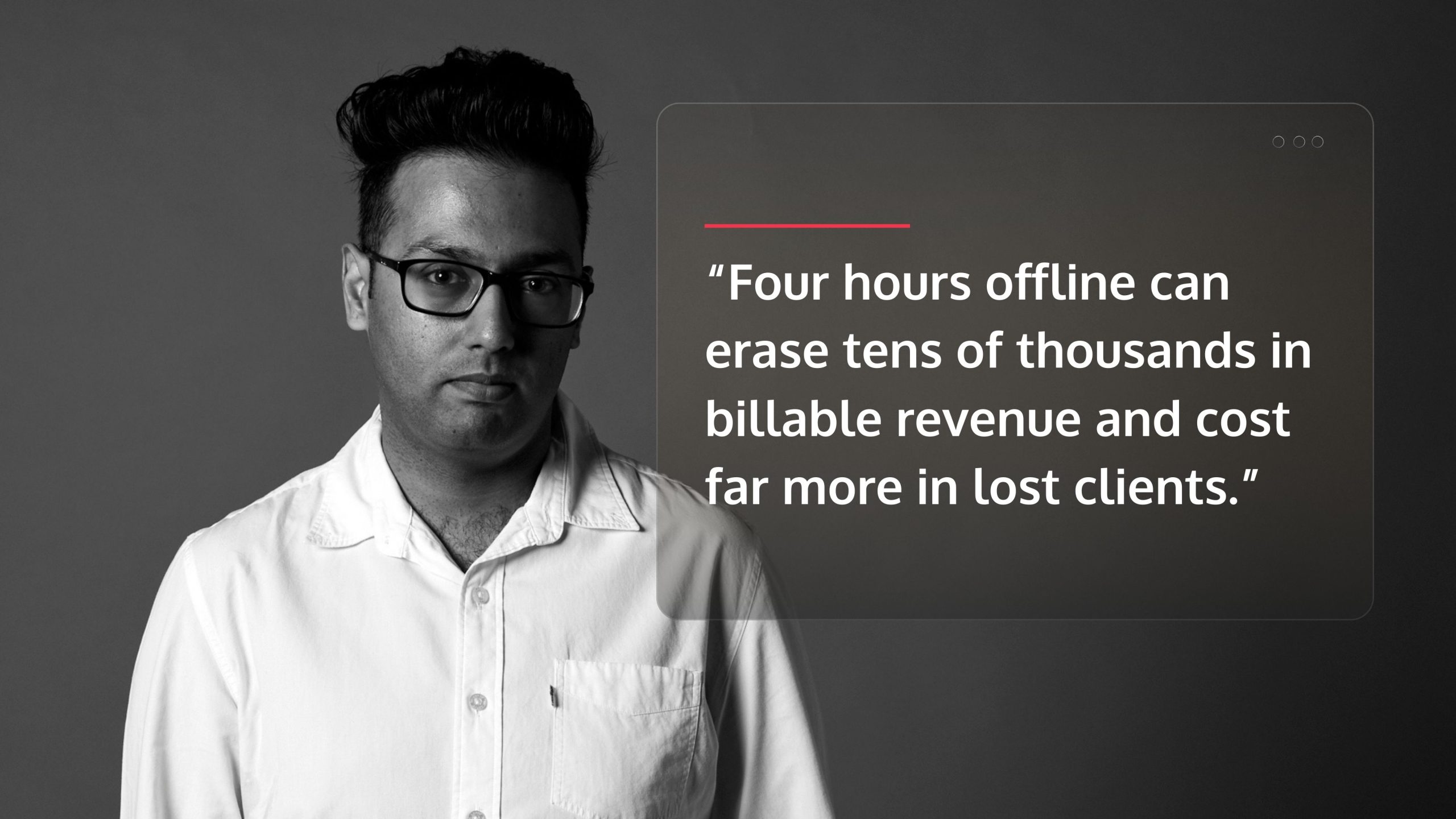
When your network goes down during tax season, you lose money in real time. A 20-person team sitting idle costs thousands per hour in unrecoverable billable time. Indirect costs are worse: missed filing deadlines for SEC 10-Q reports, client penalties, and eroded trust.
The human toll is equally devastating. With 99% of accountants experiencing burnout during busy season, a failing network drives your best people to competitors. A senior tax manager working 70-hour weeks won’t tolerate constant system crashes.
What are the consequences of network downtime for an accounting firm?
The consequences extend far beyond immediate frustration.
- Financial Loss: A mid-sized Houston firm can lose $20,000 in revenue from a single four-hour outage. A firm in Katy, TX, lost a $150,000 annual client after a crash delayed a quarterly filing by 48 hours.
- Data Corruption: Abrupt shutdowns can corrupt tax returns and audit files, requiring hours to reconstruct from a Backup and Disaster Recovery system, if one is reliable.
- Employee Turnover: Chronic IT failures accelerate burnout. Replacing a senior accountant can cost over $75,000 in recruiting, lost productivity, and training.
What role does cybersecurity play in network stability during busy season?
A network under peak load is a network under attack. Security appliances like firewalls consume resources and can become bottlenecks, slowing traffic to a crawl. Cybercriminals exploit this, knowing your team is exhausted and prone to error. Phishing attacks spike during busy season, as a tired accountant is more likely to click a malicious link. This is Why Network Security is Important for operational continuity, not just data protection.
A successful ransomware attack is the ultimate network crash. It doesn’t just slow you down; it locks your systems completely. A Sugarland firm was hit with ransomware in March 2024. The attack encrypted their file server, and the total cost, including ransom, lost billables, and reputation damage, exceeded $400,000.
Comprehensive Cybersecurity Services are foundational to network stability. Your security must be scaled for peak loads, and your team needs training before busy season begins.
Build a Resilient Firm: How to Proactively Prevent Network Failures
Preventing busy season crashes requires a strategic mindset: treat IT as an asset, not a break-fix problem. Firms that thrive during tax season invest in their infrastructure during the off-season. This proactive approach involves assessing capacity gaps, building for scalability, and monitoring performance continuously.
A tax practice in Katy, TX, migrated its software and files to a private cloud. During busy season, they scaled up server resources, then scaled back down afterward. The result was zero crashes, faster remote access, and paying only for the capacity they used. This is the power of strategic IT Strategy Services.
How can cloud-based solutions mitigate the risk of network crashes during busy season?
Cloud solutions solve the core problem of fixed capacity meeting variable demand. Instead of being limited by an on-premise server’s ceiling, cloud platforms let you dial resources up or down in real time. This “elasticity” ensures you have enough computing power for peak workloads without overpaying for idle capacity in the summer. A structured Cloud Migration ensures a smooth transition.
- Works best when: Your firm uses resource-intensive applications, employs remote staff, or sees dramatic seasonal swings in demand.
- Avoid when: You have compliance mandates requiring on-premise storage or lack expertise to manage cloud costs.
- Risks: Security misconfigurations, runaway costs if unmonitored, and vendor lock-in.
- Mitigations: Partner with a Managed Cloud Services provider to configure your Cloud Services securely, set cost alerts, and ensure compliance.
What are the best practices for managing and monitoring network performance during peak workloads?
You cannot manage what you do not measure.
- Establish a Baseline: Use monitoring tools in the off-season to define your network’s normal performance. This baseline helps you spot anomalies when demand surges.
- Configure Alerts: Set alerts to trigger when critical metrics like CPU or memory utilization cross an 80% threshold. This early warning gives you time to act before a crash.
- Schedule Proactive Maintenance: Use your slow months to perform firmware updates, apply security patches, and run health checks on aging hardware.
- Partner with a Managed Service Provider: A Managed IT Services provider offers 24/7 monitoring, identifying and resolving issues before they become emergencies. For a Sugarland firm, this proactive monitoring caught a failing switch weeks before busy season, preventing days of crashes.
Frequently Asked Questions about Accounting Firm Network Stability
What is the single biggest reason why our accounting firm network crashes during busy season?
The infrastructure was designed for the firm’s average workload, not its absolute peak. The massive spike in user activity and data processing during busy season overwhelms the fixed capacity of on-premise servers, switches, and firewalls, causing a system-wide failure.
Can we just buy more internet bandwidth to fix the problem?
Not always. If your internal server is already at 100% CPU usage, a faster internet connection won’t help because the bottleneck is internal. Solving crashes requires a holistic IT Audit and Assessment to identify all weak points, including server capacity and network hardware.
How can firms ensure adequate bandwidth and processing power to handle the surge in demand?
First, assess your peak busy season needs. Then, either upgrade on-premise hardware to enterprise-grade equipment or migrate to scalable cloud solutions. This ensures your capacity matches your demand.
How far in advance should we prepare our IT for the next busy season?
Begin planning 3-6 months before your busy season starts, during your slow period. This provides enough time to assess, procure, implement, and test changes without disrupting critical operations. Waiting until January is too late.
What are the key differences in IT infrastructure needs between busy season and off-season for accounting firms?
The differences are stark, requiring a dynamic infrastructure that can adjust to fluctuations.
| Feature | Off-Season Needs | Busy Season Needs |
| Bandwidth | Moderate, for daily operations | High, for large file transfers and remote access |
| Server CPU/RAM | Average utilization (30-50%) | Peak utilization (90-100%) |
| Concurrent Users | Standard in-office staff | All staff (in-office & remote) |
| IT Support Tickets | Routine maintenance | Critical outages, performance issues |
| Security Load | Standard threat detection | High, increased phishing attempts |
Stop Reacting to Crashes and Start Building Resilience
A stable network during tax season is a competitive advantage that impacts your ability to retain talent, serve clients, and grow. Crashes are a symptom of inadequate infrastructure, not bad luck. By treating IT as a strategic asset, you can build systems that scale with demand and eliminate predictable failures.
The firms that thrive during busy season are those that invested in their infrastructure during the off-season. They assessed their needs, upgraded hardware, migrated to scalable cloud platforms, and partnered with IT teams for 24/7 monitoring. They stopped asking why does our accounting firm network crash during busy season and started preventing it.
Your next step is to assess your infrastructure against your peak demand and implement solutions that provide scalable capacity. The time to act is during your slow season, not in the middle of a crisis.
To transform your IT from a liability into an asset, explore specialized Accounting Firm IT Services. Netsurit helps accounting firms in Houston, New York, and beyond design and manage IT infrastructure that eliminates downtime and supports sustainable growth.