And started counting dollars: how AI multiplies productivity and where it does not
Two years ago, the boardroom question was simple: “Have we tried ChatGPT?”
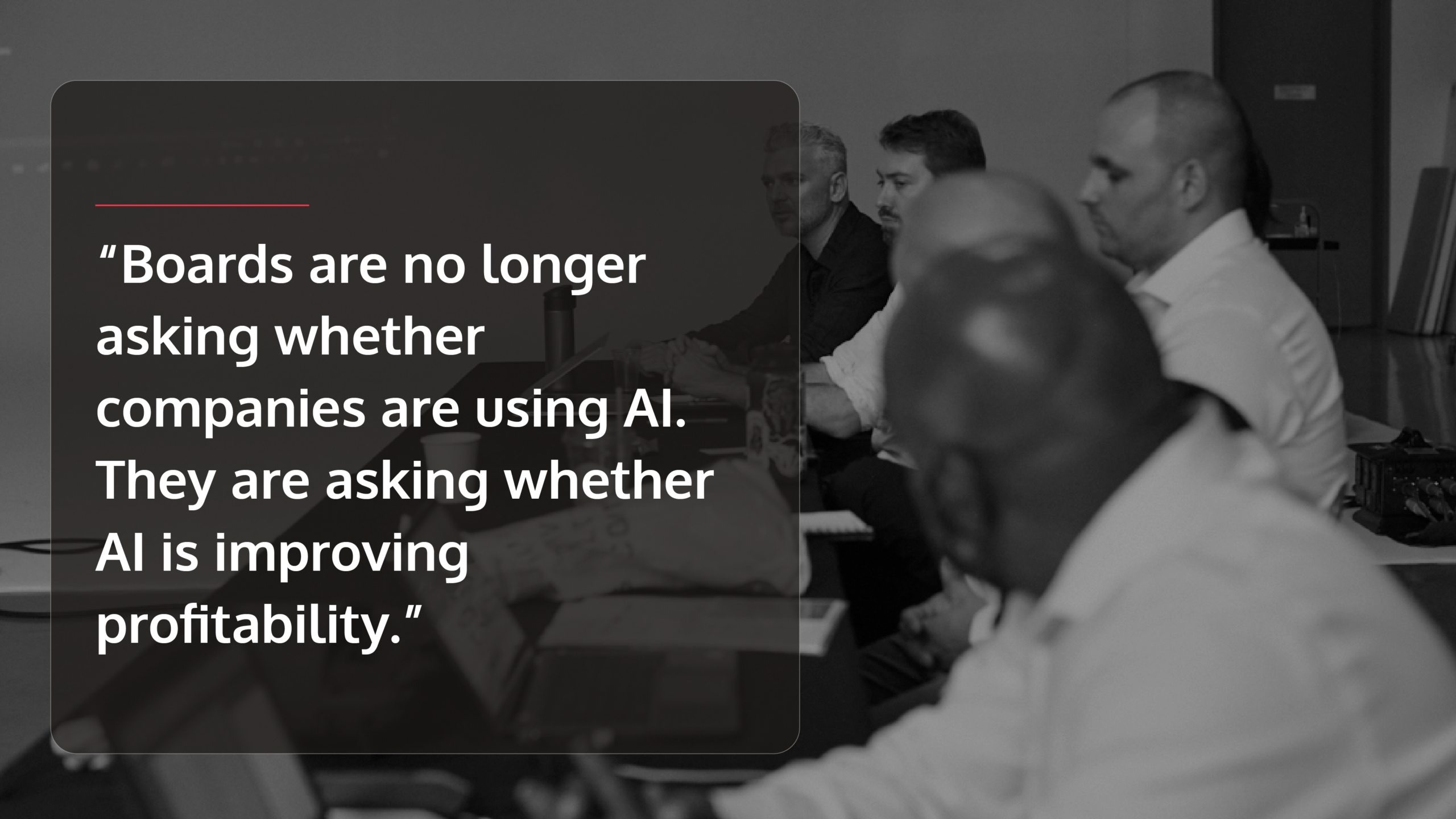
Today, that question has become much harder. Business leaders are no longer asking whether AI is interesting, impressive or even useful. They are asking whether it can improve profitability, reduce costs and deliver measurable returns within a realistic timeframe.
This shift is at the centre of Louis de Klerk’s whitepaper, which argues that while AI adoption has moved quickly, many organisations are still struggling to translate individual productivity gains into enterprise value.
The problem is not that AI does not work. In many cases, it does. Employees are drafting documents faster, summarising meetings more efficiently, writing code with support, and reducing the time spent on routine communication. The issue is that these saved hours do not automatically appear on the bottom line.
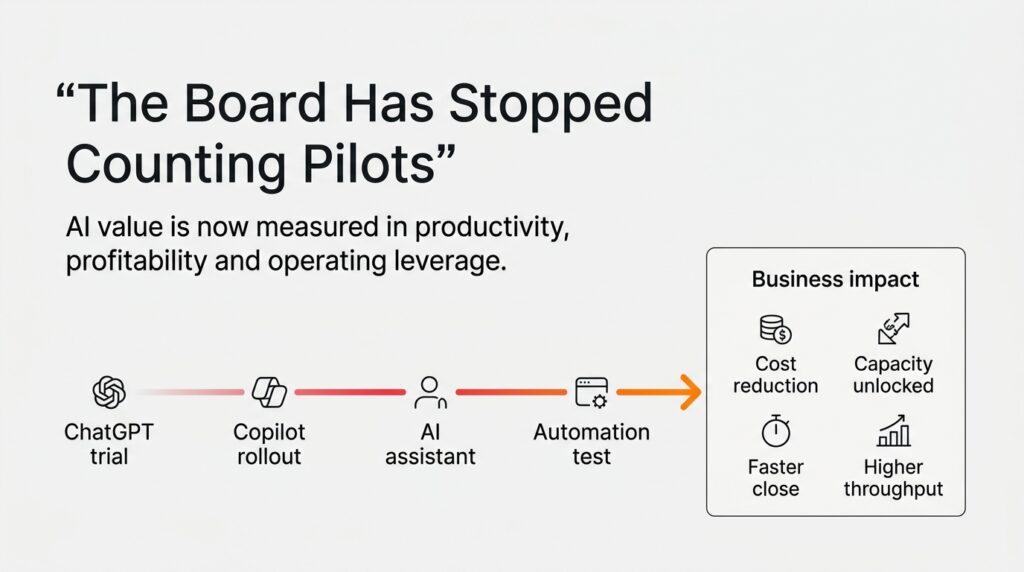
For many organisations, this is the uncomfortable gap between productivity and profitability. A person may complete a task 30% faster, but that does not necessarily mean the company becomes 30% more profitable. The saved time may be absorbed into more meetings, better-quality output, overdue internal work or general operational slack. All of these may have value, but they are not the same as operating leverage.
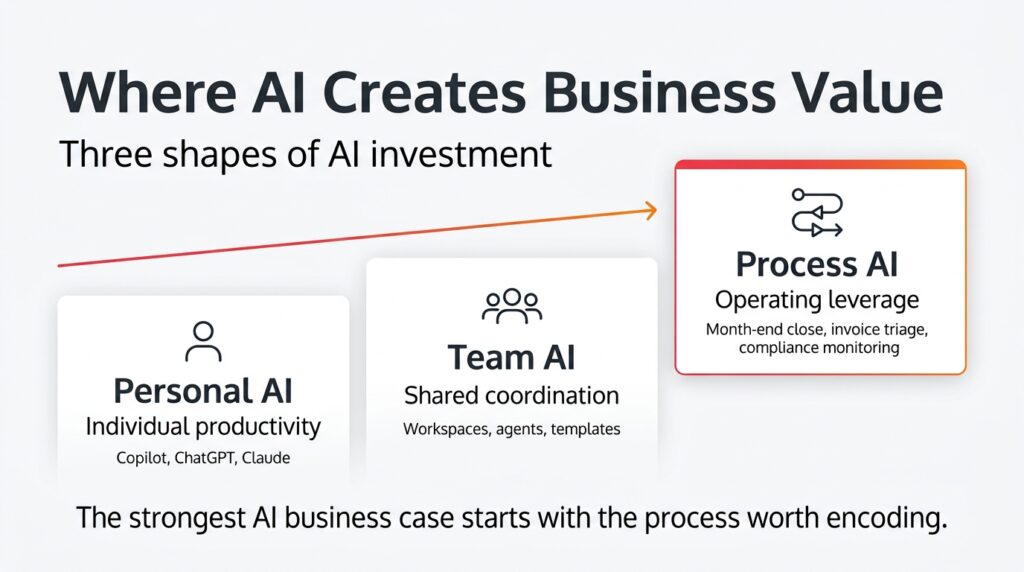
This whitepaper separates AI investment into three distinct categories: Personal AI, Team AI and Process AI:
- Personal AI refers to tools such as Microsoft Copilot, ChatGPT, Claude and coding assistants. These tools make individuals faster and can improve the quality and consistency of their work. They are relatively affordable, easy to deploy and useful across a wide range of roles. However, their impact is usually distributed and difficult to connect directly to profit.
- Team AI takes this further by improving coordination across groups of people. Shared workspaces, team-level agents, connectors, scheduled tasks and common templates can help teams work with more consistency. This can support onboarding, improve collaboration and reduce friction in repeatable team activities. It is a stronger business case than Personal AI, but it still often depends on humans remaining at the centre of each workflow.
- The real strategic shift, is Process AI. Process AI is not about amplifying a person. It is about encoding a business process so that it can run against data, on a schedule, with clear checkpoints for human review and decision-making. In this model, the human role changes from doer to reviewer, approver and exception-handler.
This is where AI begins to answer the board’s question.
A month-end close that currently takes a finance team several days can be encoded to run overnight, with exceptions ready for review the next morning. An invoice queue can be triaged automatically, with routine items pre-approved and genuine exceptions routed to the right person. A compliance monitoring process can scan regulatory changes, identify affected customers and prepare notifications before the team starts work on Monday.
In each case, the value is not measured only in minutes saved. It is measured in capacity unlocked. The same team can handle more clients, more transactions, more checks or more outputs without adding headcount at the same rate. That is the difference between personal productivity and operating leverage.
For business leaders, this creates a clearer way to approach AI investment. The question is, “Which processes are worth encoding?”
That question changes the conversation. It moves AI out of the realm of pilots and into the operating model of the business. It forces leadership teams to identify the workflows that consume the most time, create the most bottlenecks and limit growth. It also creates a more practical path to ROI, because the payback can be linked to a specific process, a specific cost base and a specific capacity gain.
The board is right to ask harder questions about AI. The early excitement around generative AI created expectations that many organisations have struggled to meet. However, the issue is not that AI has failed to deliver. It is that many businesses have been measuring the wrong thing.
The next phase of AI will not be won by organisations that count the number of tools they have deployed or the number of pilots they have launched. It will be won by those that understand where AI can genuinely change the economics of work.