Why AI for Auditors Is Reshaping Financial Assurance in 2025 and Beyond
AI for auditors is no longer a distant possibility—it’s already transforming how audit teams work, what they can detect, and how they allocate their time. If you’re exploring this technology, here’s what you need to know:
Quick Answer: AI for Auditors
- What it does: Analyzes 100% of transactions (not samples), detects anomalies, automates document review, and flags unusual patterns in real time
- Key benefits: 20–70% improvement in anomaly detection, 33% reduction in going concern errors, and up to 50% efficiency gains in pilot projects
- Critical limitation: AI cannot replace professional judgment, materiality assessments, or ethical reasoning—it augments, not replaces, human auditors
- Main challenges: Data quality issues, algorithmic bias, explainability (“black box” models), privacy risks, and auditor skill gaps
- Adoption reality: 83% of organizations expect widespread AI use in financial reporting within three years; Big Four firms have invested over $9 billion in AI technologies
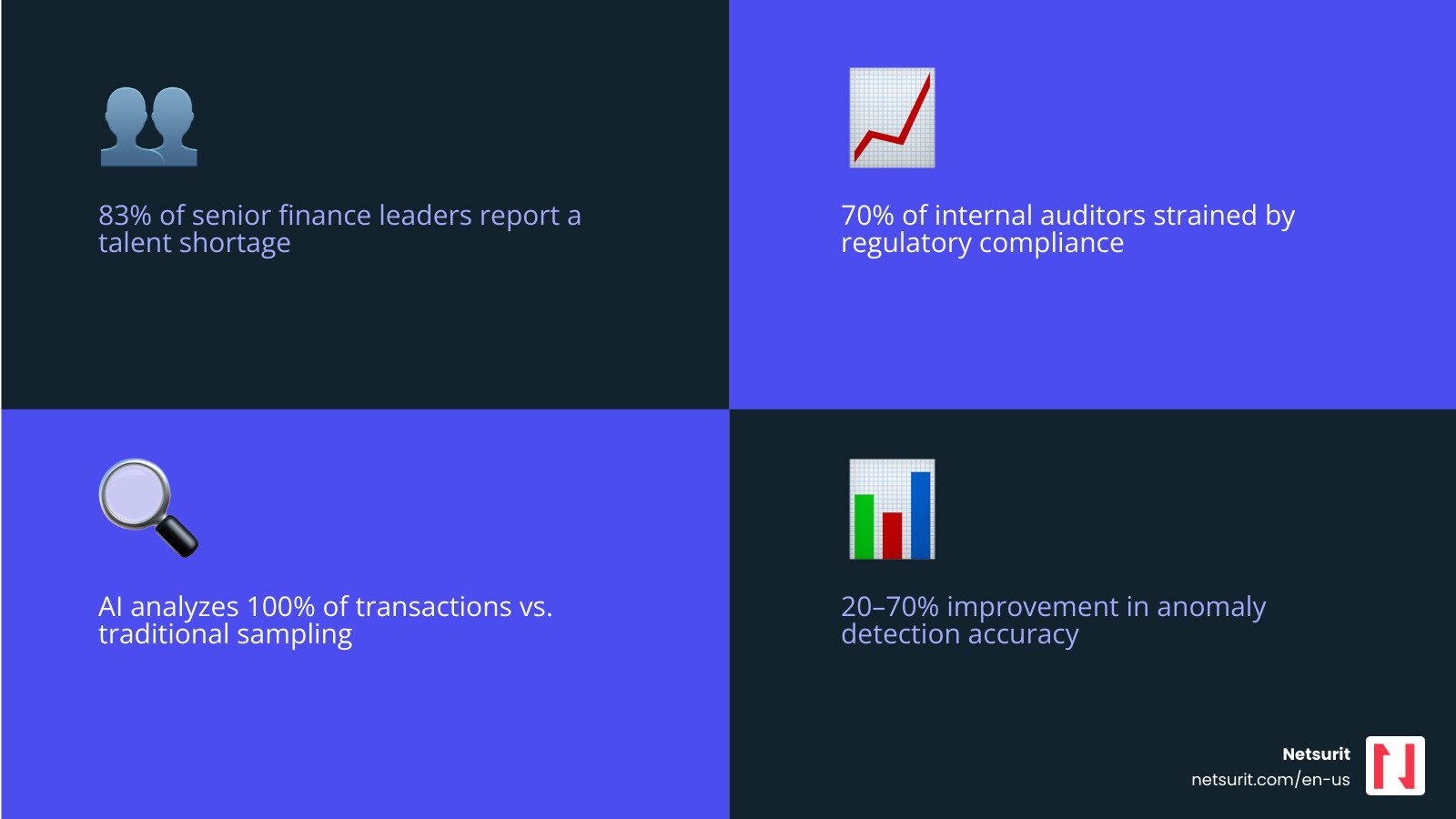
The numbers tell a stark story. 83% of senior finance leaders report a talent shortage, while 70% of internal auditors say growing regulatory compliance requirements are straining their current audit plans. At the same time, 83% of organizations expect to use AI widely in financial reporting within three years, according to KPMG’s study of 1,800 companies globally. This isn’t hype—it’s a collision of necessity and opportunity.
Traditional audit methods relied on sampling: you’d test a fraction of transactions and extrapolate. AI flips that model. It can analyze 100% of transactions, uncovering risks even in datasets with multi-variable complexity that would overwhelm manual review. A 2025 systematic review of 100 peer-reviewed studies found that AI-powered anomaly detection improved accuracy by 20–70% over manual sampling, while pilot projects showed 10–50% efficiency gains. More importantly, research published in Management Science found that audit offices using AI produced 33% fewer going concern opinion errors and 62.5% more accurate material weakness assessments compared to offices without AI.
But here’s the tension: AI also introduces new risks. Models can hallucinate fictitious audit standards, perpetuate biases hidden in training data, or produce outputs that auditors struggle to explain to regulators. The Canadian Public Accountability Board (CPAB) observed in 2024 that AI adoption in public company audits is still in early stages, with firms scrambling to develop policies, certification processes, and training programs. Auditors must maintain heightened professional skepticism—not blind trust—when reviewing AI outputs.
The shift isn’t just technical; it’s strategic. AI enables continuous monitoring rather than periodic snapshots, full population analysis instead of sampling, and predictive analytics that forecast liquidity issues or revenue fluctuations before they materialize. It also changes what auditors do: routine data extraction and reconciliation tasks get automated, freeing professionals to focus on judgment-intensive work like interpreting anomalies, assessing materiality, and advising clients. A 2024 empirical study analyzing 407,000+ resumes from 648 audit offices found that AI adoption increased auditor jobs by 4.3%, with growing demand for soft skills like cognitive abilities (up 3.6%), efficiency (up 4.4%), and customer service (up 3.0%).
For Houston-area tax and accounting firms—especially those serving regulated industries like energy, healthcare, and logistics—the stakes are high. Complex supply chains, multi-jurisdictional compliance, and high-volume transaction environments make AI not just useful but essential. Yet many firms face “invisible” AI adoption: employees using consumer tools like ChatGPT or embedded AI in Microsoft 365 without IT oversight, creating data leakage risks. The path forward requires balancing innovation with governance, efficiency with ethics, and automation with human accountability.
I’m Orrin Klopper, CEO of Netsurit, where we’ve helped over 300 client organizations navigate digital transformation, including AI integration for finance and audit functions. Over nearly 30 years building IT services from South Africa to North America, I’ve seen how AI for auditors shifts from experimental to mission-critical—and how firms that embrace it responsibly gain competitive advantage while those that wait fall behind.
AI for auditors terms to know:
- Data analytics auditing
- Machine learning audit
- Reduce audit risk
Beyond Sampling: How AI for Auditors Enables 100% Population Testing

Traditional auditing is built on the statistical compromise of sampling. Because humans cannot manually review 500,000 journal entries, we select a “representative” sample and hope it catches the outliers. AI for auditors eliminates this compromise.
By leveraging machine learning algorithms, we can now process every single transaction within a fiscal year. This allows us to uncover risks in large datasets with multi-variable complexity—identifying not just high-dollar errors, but subtle patterns of fraud or systemic control failures that sampling would almost certainly miss. According to KPMG’s global AI in finance report, this transition from “digital age” to “AI age” represents a fundamental revolution in financial reporting.
| Feature | Traditional Sampling | AI-Powered Auditing |
|---|---|---|
| Data Scope | 1% to 5% of transactions | 100% of transactions |
| Risk Detection | Relies on manual “red flags” | Automated anomaly detection |
| Timing | Retrospective (after the fact) | Real-time or continuous |
| Accuracy | Prone to human fatigue/error | High precision (variable by model) |
| Focus | Checking boxes | Analyzing high-risk exceptions |
Real-time Insights and Continuous Monitoring
The “snapshot” audit is becoming obsolete. Instead of waiting for year-end to find a missing control, AI enables continuous monitoring. This is particularly vital for fraud detection, where early alerts can prevent significant capital loss.
For instance, a logistics provider in Houston might use AI to monitor shipping transactions against policy thresholds in real-time. If an unusual invoice size or an unauthorized vendor appears, the system flags it immediately. We see this as the best way to automate accounting firm workflows with AI, moving the auditor from a “historian” to a “navigator” who provides real-time assurance.
Targeted Procedures and Efficiency Gains
Efficiency in an audit doesn’t mean cutting corners; it means better resource allocation. When AI handles the heavy lifting of population analysis, auditors can focus their professional judgment on the 2% of transactions that actually show risk.
By performing journal entry testing early in the risk assessment phase, you can prioritize high-risk items first. This prevents the “crunch time” at the end of an engagement and ensures that junior auditors aren’t spending hundreds of hours on low-value data entry.
Practical Applications: From Document Extraction to Agentic Workflows
The practical utility of AI for auditors spans three main technological categories: Natural Language Processing (NLP), Robotic Process Automation (RPA), and the emerging field of Agentic AI. While RPA follows rigid rules (e.g., “move this file here”), Agentic AI can execute multi-step plans, such as “reconcile these 500 bank statements against the subledger and flag any discrepancies over $500.”
These AI tools to reduce manual data entry in accounting firm environments are shifting the focus from isolated tasks to outcome-based workflows.
Automated Evidence Collection and Reconciliation
Extracting data from unstructured documents—like leases, revenue contracts, or bank statements—used to be a manual nightmare. AI-powered document review tools now use NLP to identify key terms, dates, and amounts, hyperlinking them back to the source document for easy verification.
Example: Sugarland Tax Firm
A tax firm in Sugarland, TX, recently implemented an AI document extractor to handle property tax records for its commercial clients. Instead of manually typing data from thousands of PDFs into workpapers, the AI extracted the values and flagged inconsistencies in minutes. This allowed the team to spend more time on high-level tax strategy rather than data scrubbing. The CPA.com Generative AI Toolkit highlights that this type of automation is the “low-hanging fruit” for firms looking to scale.
Intelligent Controls Testing and Process Mining
AI doesn’t just look at the data; it looks at the process. Process mining analyzes system logs to reconstruct how a transaction actually moved through an organization.
Example: Conroe Manufacturing
A manufacturing company in Conroe used AI to analyze its procurement-to-pay cycle. The AI identified that 15% of transactions bypassed the required purchase order approval step—a major control deviation. Traditionally, an auditor might have tested 25 samples and found zero errors. The AI looked at the entire year’s data and found hundreds of violations, enabling a much more accurate risk assessment.
Navigating the Risks: Data Privacy, Bias, and the “Black Box” Problem
We must be realistic: AI is not a magic wand. It brings significant risks that require robust governance. The “Black Box” problem—where an AI flags a risk but cannot explain why—is a major hurdle for regulatory compliance. If you can’t explain the logic to a PCAOB inspector, the AI’s output is effectively useless for formal assurance.
AI Implementation Trade-offs
- Works best when: Data is standardized, high-volume, and the objective is clear (e.g., finding duplicates).
- Avoid when: The audit area requires deep ethical reasoning or the client’s data is messy and unformatted.
- Risks: Hallucinations (making up facts), data leakage to public models, and “automation bias” (trusting the computer too much).
- Mitigations: Use enterprise-grade, private AI instances; maintain a “human-in-the-loop” for every conclusion; implement strict data lineage tracking.
Ethical Considerations and Professional Skepticism
Auditors have a code of ethics that positions them ideally to oversee AI. However, we’ve seen cases where AI “hallucinates” non-existent stakeholders or fabricates citations of IIA standards. You must maintain professional skepticism. If an AI summarizes a contract, you must verify the summary against the original text. As noted in ISACA IT Audit Resources, the auditor’s role is to validate the tool’s reliability before relying on its output.
Ensuring Compliance with Auditing Standards
Standard-setters are catching up. The Canadian Standard on Quality Management (CSQM 1) already mandates that firms have policies for technological resources, including AI.
Example: Katy Logistics Company
A logistics firm in Katy implemented an AI for internal audits but failed to document the model’s training data or decision-making logic. During an inspection, they couldn’t prove the AI wasn’t biased against certain vendors. To fix this, they had to implement a governance framework that included regular “drift detection” to ensure the AI’s accuracy hadn’t degraded over time.
The Auditor of 2026: Skills and Strategies for Responsible Adoption
The auditor of the near future isn’t a data scientist, but they must be “AI literate.” This means understanding how models work, how to prompt them effectively, and how to spot their failures. The ISACA Advanced in AI Audit credential is a prime example of the new specialized knowledge required in our field.
Upskilling for AI for Auditors: Beyond Technical Proficiency
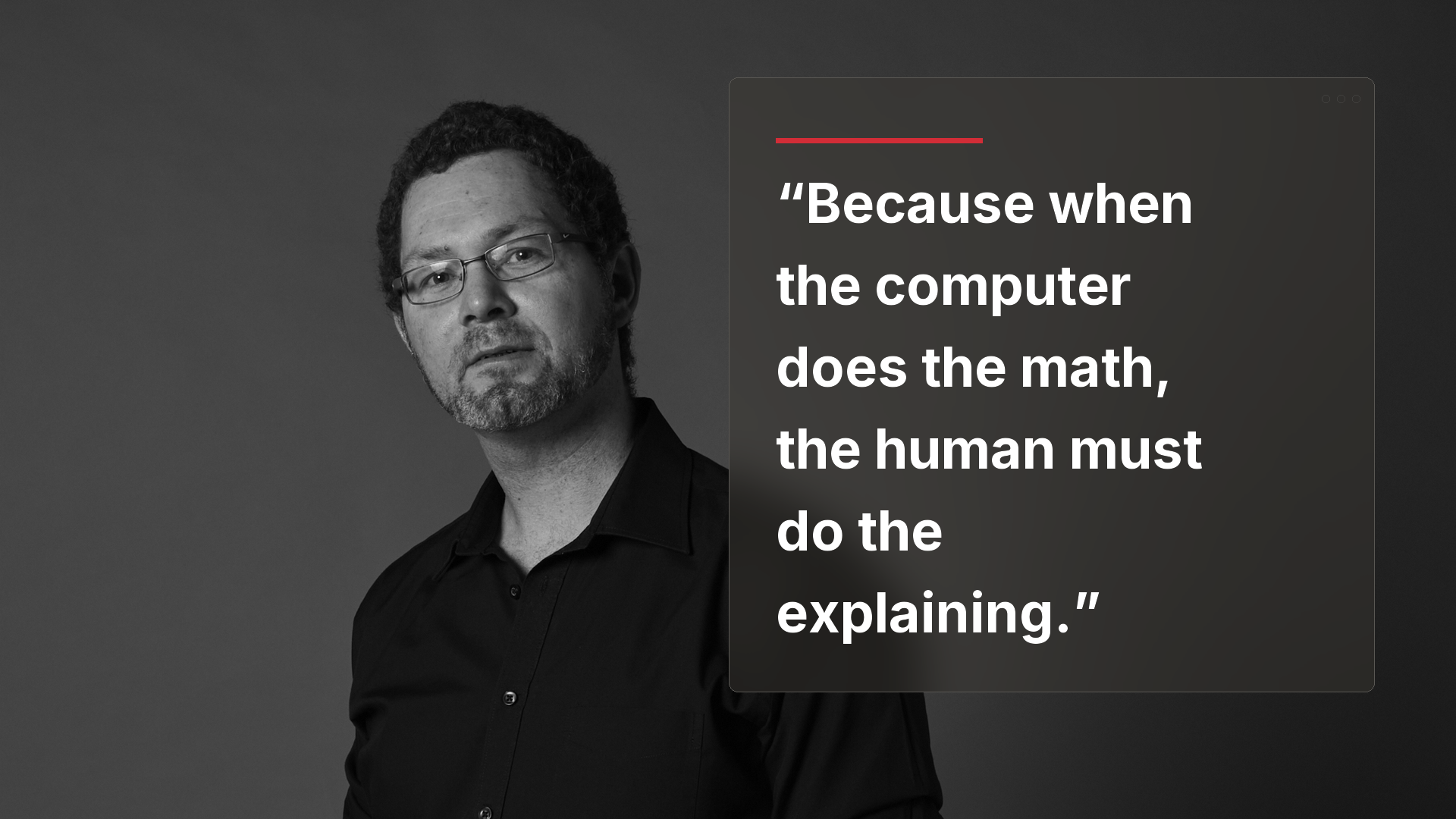
Surprisingly, the most in-demand skills following AI adoption aren’t “hard” coding skills. Research indicates a 3.6% increase in demand for cognitive abilities and a 3.0% increase in customer service skills. Why? Because when the computer does the math, the human must do the explaining.
Ready to work smarter? Let’s talk AI! We recommend focusing on:
- Prompt Engineering: Learning how to ask refined questions to get accurate, non-hallucinated results.
- Critical Evaluation: Developing the “skeptic’s eye” to identify when an AI output feels “off.”
- Data Literacy: Understanding data ingestion, cleansing, and governance.
Measuring Success with AI for Auditors
How do you know if your AI investment is working? Don’t just look at “time saved.” Look at:
- Audit Quality: Are you finding more material weaknesses or going concern issues? (Recall the 33% error reduction stat).
- Coverage: Are you now testing 100% of the population where you used to test 1%?
- Employee Retention: Is your team happier because they aren’t doing manual data entry? (Crucial given the 83% talent shortage).
Frequently Asked Questions about AI for Auditors
Can AI for Auditors Replace Human Judgment?
No. AI lacks the capacity for ethical reasoning, understanding of complex business context, and professional skepticism. It can highlight an anomaly, but it cannot decide if that anomaly is “material” or if it represents a “significant deficiency” in internal controls. The auditor remains the sole person responsible for the audit opinion.
How Does AI Improve Fraud Detection in Auditing?
AI excels at finding “needles in haystacks.” By analyzing 100% of transactions, it can spot patterns like “split purchases” (to bypass approval limits), unusual weekend activity, or vendors with addresses that match employee records. Traditional sampling might miss these if the specific fraudulent transaction isn’t selected.
What Are the Primary Challenges of Implementing AI?
The “Big Three” challenges are Data Quality (garbage in, garbage out), Cost (high initial investment in tools and training), and Leadership Buy-in. Many firms struggle to move past the “experimentation” phase because they haven’t standardized their internal data formats.
Conclusion
The future of auditing is a collaboration between human intuition and machine precision. At Netsurit, we believe that AI for auditors is the key to solving the talent shortage while meeting the increasing demands of regulatory compliance in Houston, Sugarland, Conroe, and Katy.
We don’t just provide tech; we provide the roadmap for digital transformation for accounting that keeps you compliant and competitive. The “AI Age” is here—let’s make sure your firm is ready to lead it.
Next Action: Conduct an “AI Readiness Assessment” to identify which of your manual audit tasks are best suited for immediate automation.