Eighteen months ago, I was copy-pasting code suggestions from ChatGPT.
I still made every decision. The AI was a faster typewriter.
Today, in many workflows, that mental model no longer holds.
I set the objective, define a few constraints, and let an AI system generate options, test approaches, evaluate results, and iterate before I step back in. I’m not watching every step. I’m reviewing progress, making judgment calls, and deciding what matters.
That shift happened fast. But the important story isn’t speed. It’s loops.
Loops, not tools
A tool helps you do a task faster. Better tool, more output — fairly linear.
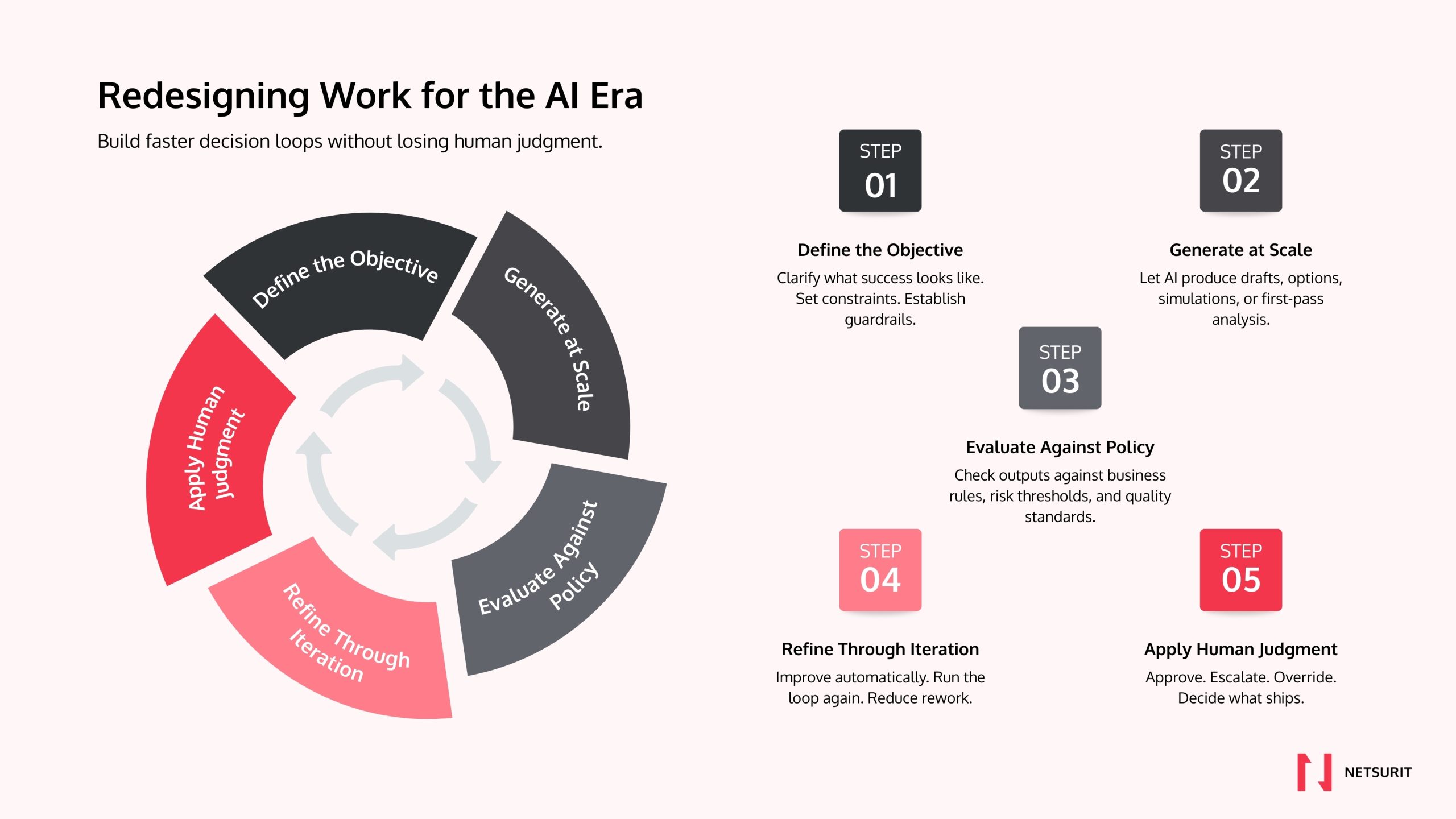
A loop is different. A loop generates a result, evaluates it, improves it, and repeats. Each cycle informs the next. When those cycles get fast enough, the system starts to behave differently. Not just faster, but more capable.
This isn’t just “autocomplete got better.” The models improved, yes. But the bigger shift is structural: AI can now operate inside workflows, across files, systems, and defined policies, with enough context to complete multi-step tasks. Plugin and skill systems let organizations encode their actual business logic so AI executes it consistently, not just creatively.
Once that happens, new loops become possible:
- draft → review → revise
- test → diagnose → patch
- analyse → summarize → escalate
- monitor → detect issue → propose response
When inner loops accelerate, outer loops change too. Teams run more experiments. Decisions happen closer to real time. Work that used to require handoffs across five roles can happen in one continuous flow, with human oversight where it actually counts.
The mistake most companies are making
Frustratingly most organizations are still asking the wrong question: how do we make people more productive with AI?
It sounds reasonable. But it’s a task-level question. It assumes the structure of work stays the same and AI gets slotted in somewhere.
If intelligence becomes abundant and coordination gets cheaper, what should the business look like? That’s the question worth pondering.
Because most business structures weren’t designed from first principles. They were inherited. Departments, approval chains, batch processes, management layers — these evolved as workarounds for a world where human attention is scarce, expertise is unevenly distributed, and coordination is expensive.
AI changes those constraints. But most enterprises are still running on architecture built for yesterday’s limits.
Why results are so uneven
A small number of companies are rethinking how work gets structured, where humans sit in the loop, and which decisions truly need a person. They’re rebuilding around AI, and showing amazing results.
Most others are bolting it onto existing processes. Same handoffs. Same silos. Same approvals. Same messy information flows. Just with a chatbot somewhere in the middle.
Then they’re surprised when the results are incremental, or never show up at all.
Gartner predicts 40% of agentic AI projects will be cancelled by 2027. IBM found only a quarter are delivering expected ROI. The issue is rarely the model itself. It’s the system around it.
Automate ten steps but leave ownership unclear, policies implicit, and exceptions unresolved, and you just arrive faster at the same bottleneck.
What became scarce
AI is making many forms of cognitive work cheaper. Drafting, summarizing, classification, pattern detection, first-pass analysis — all moving toward low marginal cost.
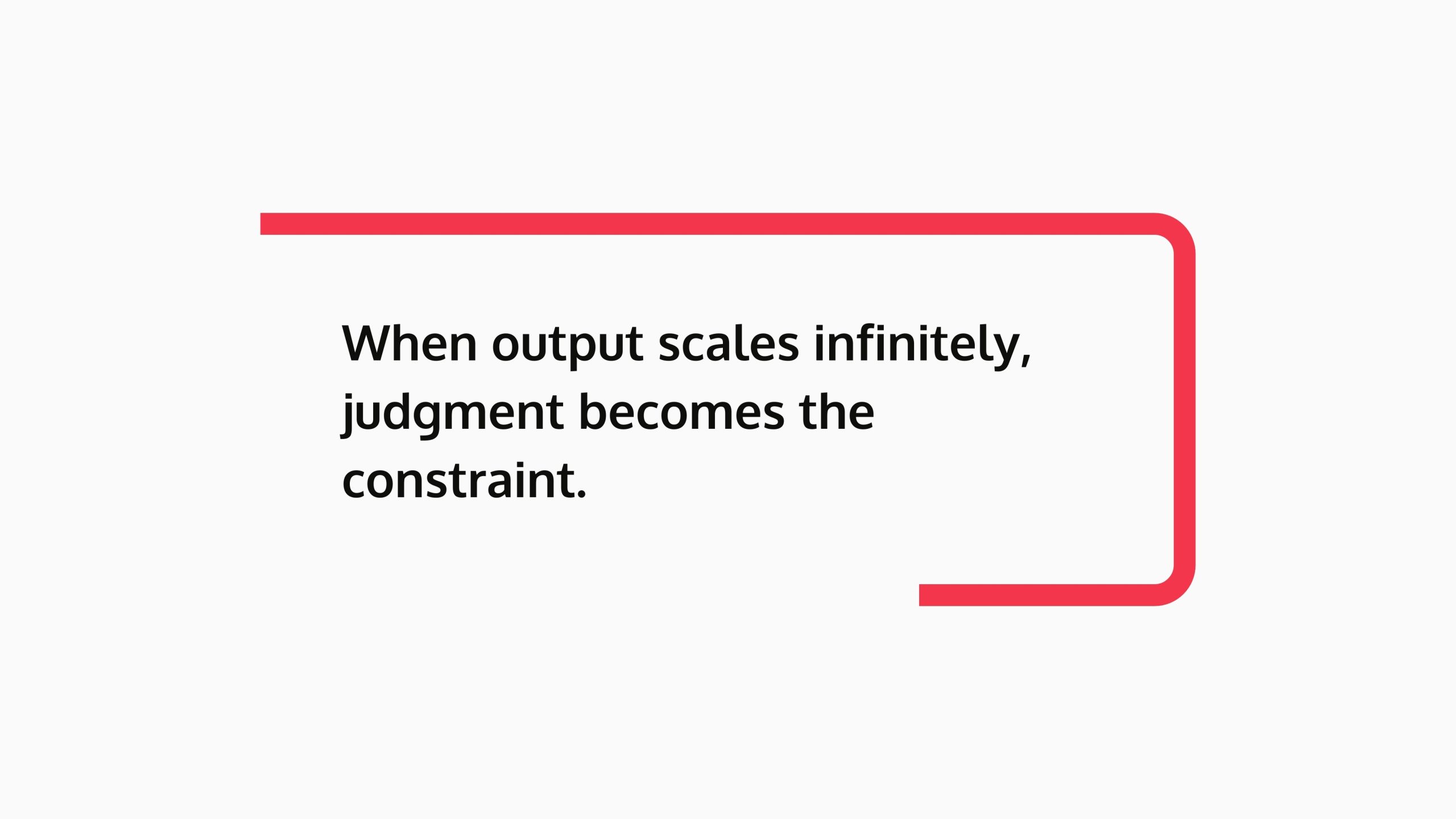
But that doesn’t make human judgment less important. It makes it more important, because there’s more output flowing through the system and less time to evaluate any of it.
Someone still has to decide:
- Is this output actually good?
- Is this the right trade-off?
- Is this safe to ship?
- What happens if it’s wrong?
You can delegate cognitive labour. You cannot delegate accountability.
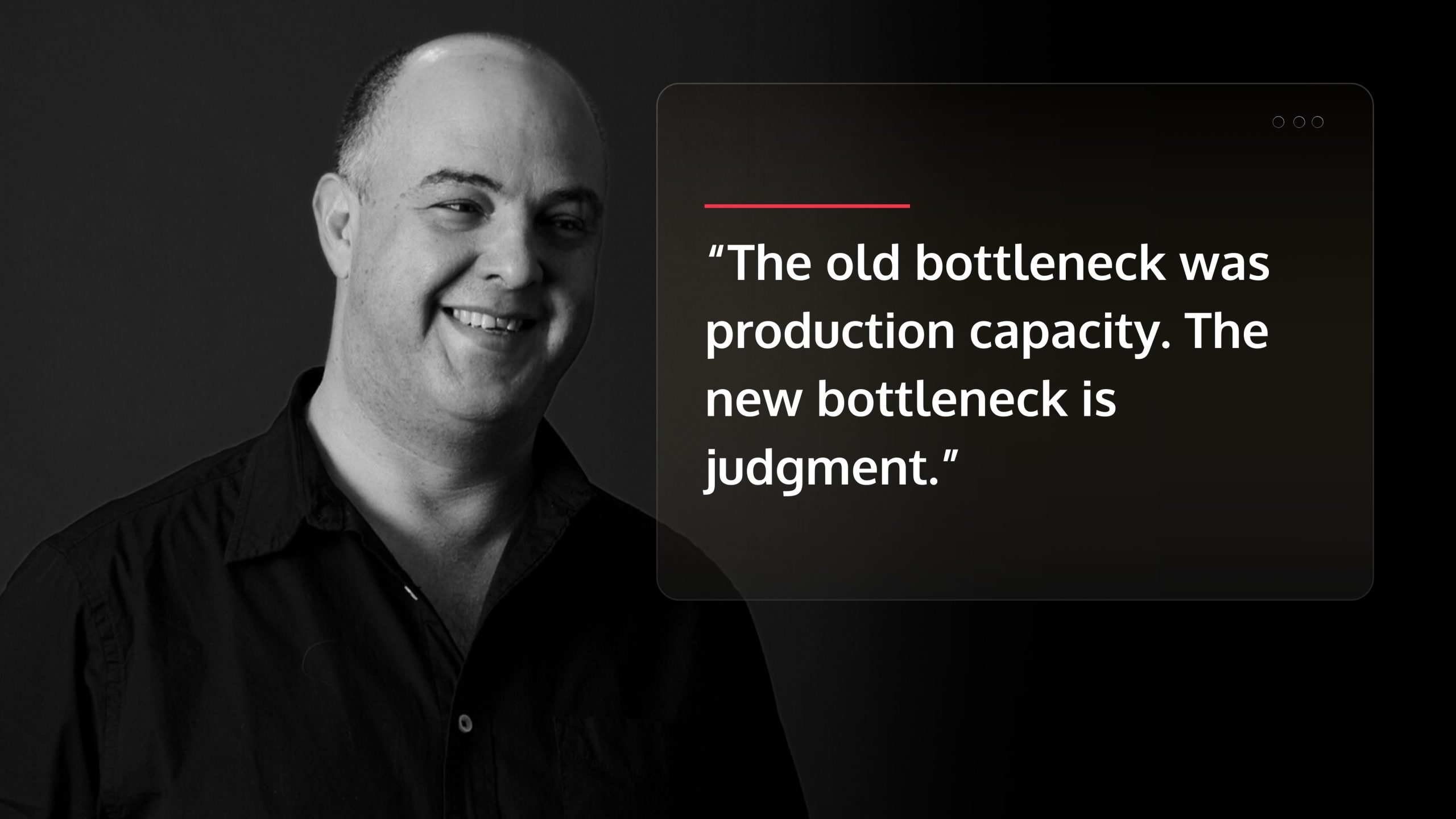
The old bottleneck was production capacity — can we build this fast enough? That’s dissolving. The new bottleneck is judgment. Can we evaluate what should be done, what quality means, and what gets approved? Human attention is becoming the scarce resource.
So what should companies do now?
You don’t need a grand AI transformation program. But you do need a clear stance.
Start with one or two workflows where cycle time, rework, or handoffs create real pain. Map the loop. Define what counts as truth. Be explicit about escalation triggers. Write policies as reviewable playbooks, not tribal knowledge.
Then measure what matters: cycle time, rework rate, exception volume, cash impact.
The companies that benefit most from AI won’t just have better tools. They’ll have redesigned how work moves.
AI is not a feature to bolt onto existing processes. It’s a new substrate for coordination. Keep yesterday’s structure and you’ll mostly get yesterday’s results, just faster.
If you were designing your business today, with AI as a given, what would you build differently?