Why AI Financial Data Migration Is Now a Business-Critical Decision
AI financial data migration — the use of artificial intelligence to automate, validate, and govern the movement of financial data between systems — is rapidly replacing manual migration methods that are slow, error-prone, and expensive.
Here’s what you need to know upfront:
| What AI Does in Financial Data Migration | Why It Matters |
|---|---|
| Automates data cleansing and validation | Cuts errors by up to 40% vs. manual processes |
| Maps schemas using NLP and pattern recognition | Reduces mapping time from months to weeks |
| Detects anomalies and flags compliance gaps | Keeps you audit-ready under SOX, GDPR, and CCPA |
| Generates audit trails automatically | Eliminates manual documentation risk |
| Compresses project timelines end-to-end | Reduces timelines by up to 60% and costs by up to 50% |
The stakes are high. Around 83% of data migration projects fail or exceed budget — not because of bad technology, but because of poor planning and inadequate data quality controls. For financial institutions, the consequences go beyond cost overruns: a failed migration can mean compliance violations, financial misstatements, and operational downtime.
The good news is that AI changes the math significantly. Institutions that have adopted AI-driven migration approaches report dramatic results — one bank cut a 48-hour risk and compliance process down to 30 minutes, scaling from 40,000 customers to roughly 6 million served through its partner ecosystem. These aren’t outliers; they reflect what becomes possible when AI handles the volume work that used to require armies of engineers and analysts.
But AI is not a silver bullet. It introduces its own risks — algorithmic bias, integration complexity with legacy systems, and significant upfront investment. This guide gives you a clear-eyed look at both sides.
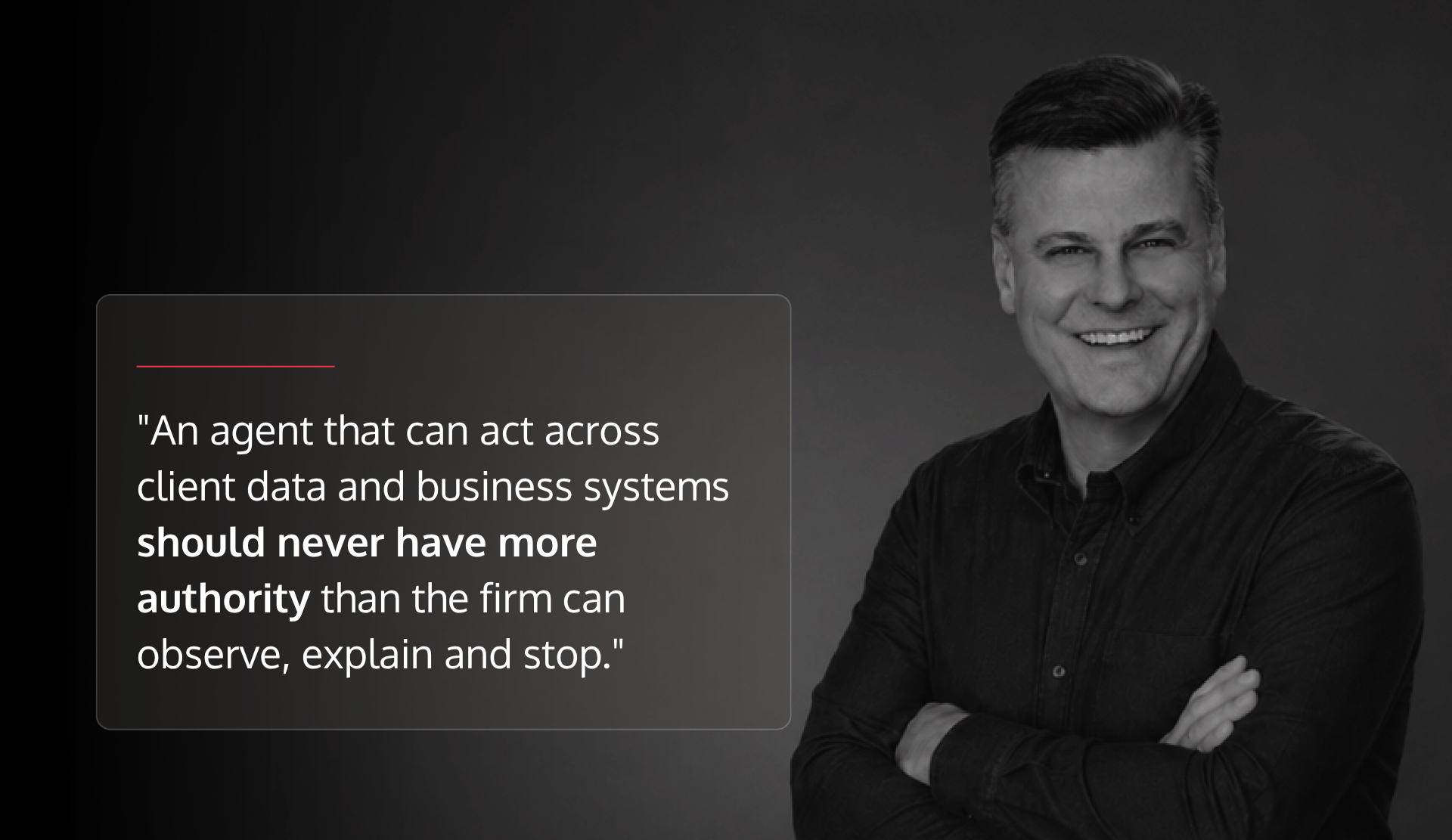
I’m Orrin Klopper, CEO and co-founder of Netsurit, and over nearly three decades of leading IT and digital transformation for more than 300 organizations, I’ve seen how poorly planned AI financial data migration projects derail even well-resourced teams — and how the right approach turns it into a genuine competitive advantage. In the sections ahead, I’ll walk you through proven strategies, real-world benchmarks, and the practical steps that separate successful migrations from the 83% that don’t make it.
Terms related to AI financial data migration:
Overcoming the 83% Failure Rate in Traditional Migrations
Traditional migration is essentially a manual “lift and shift” that ignores the underlying rot in legacy data. When you move disorganized data from an old system to a new one, you don’t solve problems; you just move them to a more expensive neighborhood. This is why 83% of projects fail. They hit “data debt”—hidden inconsistencies, duplicate records, and orphaned transactions that manual teams simply can’t catch at scale.
We’ve seen firms struggle with data silos where the General Ledger doesn’t talk to the CRM, leading to broken reporting post-migration. To avoid this, you must treat migration as a transformation, not just a transfer. Using a Cloud Migration Checklist is a start, but for finance, the validation requirements are much stricter. If you are worried about the technical debt lurking in your servers, learn How to Move Your Data Center to the Cloud Without Losing Your Mind.
Identifying Hidden Risks in Houston-Based Accounting Systems
In the Houston metro area—from the energy corridor to the financial hubs in Sugar Land—accounting firms are facing a surge in data volume. We recently worked with a firm in Sugar Land that had twenty years of legacy records stored in a fragmented SQL environment. They were worried that a move to the cloud would trigger a cascade of reconciliation errors.
The risk isn’t just technical; it’s local. For instance, the Conroe city council and ai data centers development highlights how the infrastructure for AI is moving closer to home, but the expertise to manage the data within those centers remains a bottleneck. Local firms often find that their “clean” data is actually riddled with formatting inconsistencies that only become visible during a migration dry run.
How AI Financial Data Migration Solves Quality and Validation Gaps
AI doesn’t just move data; it interrogates it. Modern platforms use a 13-layer quality engine to score every record before it ever touches the target system. This involves probabilistic matching—where the AI identifies that “J. Doe Corp” and “John Doe Corporation” are the same entity—and anomaly detection to flag transactions that fall outside of historical patterns.
By using an AI-Powered Data Migration Factory, organizations can implement a centralized Knowledge Graph. This graph learns the relationships between your data points, ensuring that when a record moves, its context moves with it. This is supported by an AI-orchestrated ETL Pipeline that enforces mandatory safety checks, such as field length validation and currency code standardization, at every stage.
Improving Data Cleansing for AI Financial Data Migration
Manual cleansing is the “grunt work” that kills project momentum. AI uses Natural Language Processing (NLP) to classify text fields, such as vendor descriptions or memo lines, into standardized categories.
- Duplicate Handling: AI identifies overlaps that “Find and Replace” misses by analyzing behavioral patterns.
- Missing Value Imputation: If a record is missing a cost center, AI can predict the correct value based on historical entries with high accuracy.
This level of automation is a cornerstone of Digital Transformation in Accounting, where the goal is to shift staff from data entry to high-value analysis.
Validating Integrity in AI Financial Data Migration Workflows
The biggest fear in finance is losing referential integrity—where a transaction exists but the associated customer record is gone. AI tools like JarvisX use a blend of deterministic rules (70%) and semantic scoring (30%) to ensure data isn’t just present, but meaningful.
Trade-offs of AI Validation:
- Works best when: You have high-volume, structured datasets (ERP, GL extracts).
- Avoid when: Data is so sparse that the AI lacks enough context to “learn” the patterns.
- Risks: Over-reliance on “auto-repair” features can lead to subtle logic errors.
- Mitigation: Always keep a “Human-in-the-Loop” (HITL) for low-confidence scores.
Accelerating Timelines with Agentic Mapping and GenAI
Mapping source fields to a new target schema used to take months of senior engineer time. With AI financial data migration, we can compress this significantly.
| Process | Manual Approach | AI-Driven Approach |
|---|---|---|
| Schema Mapping | 4 – 6 Months | 6 Weeks |
| Data Validation | 3 Rounds | 1 Round |
| Implementation Labor | 2,800 Hours | ~900 Hours |
Agentic AI tools like the Maia Migration Agent can convert legacy ETL pipelines autonomously in minutes. Instead of rebuilding logic from scratch, engineers act as reviewers, approving the AI’s suggestions. This approach, often called AI-Facilitated System Migration, focuses on compressing the labor-intensive middle of the project.
Automating Documentation and Audit Trails
Regulators don’t just care that the data is right; they care how it got there. Generative AI can now document every transformation step in real-time. By using a Retrieval-Augmented Generation (RAG) knowledge base, the system can turn internal technical notes into a searchable audit trail. This is a key part of how automation turns your digital migration into a joyride, removing the “documentation tax” that usually follows a go-live date.
Case Study: Compressing Implementation for Katy Financial Services
Consider a mid-market financial services firm near Katy, TX, undergoing an M&A-driven consolidation. They needed to merge three different legacy accounting systems into a single cloud ERP. By using AI-driven mapping, they achieved a 68% reduction in engineer hours.
As noted in recent reports on how AI is changing finance roles in Houston, the shift isn’t about replacing people; it’s about allowing a small team in Katy to perform the work of a global IT department. They moved 180,000 account records in six months rather than the projected nine.
Ensuring Regulatory Compliance and Governance in 2026
In May 2026, compliance is non-negotiable. AI financial data migration must account for SOX, GDPR, and CCPA from day one. AI can automatically identify and mask Personally Identifiable Information (PII) during the transfer. Tools like DataBridge MCP use “DataShield” technology—an offline masking layer that scrambles sensitive data while preserving its analytical structure. This allows you to test your new system with realistic data without risking a privacy breach.
For a deeper dive into these requirements, see Your Guide to AI in Tax and Accounting.
Managing Ethical and Security Considerations
AI is only as good as its training data. If your legacy data contains historical biases (e.g., in credit scoring or loan approvals), an AI migration could bake those biases into your new system. We recommend adversarial training—testing the AI against hundreds of fraud and error scenarios—to ensure it remains objective. Security is also paramount; always use end-to-end encryption (AES-256) and fine-grained access controls. You can hear more about these strategies in our AI in Finance On-Demand Webinar.
Measuring ROI and Success Metrics for AI-Driven Projects
How do you know if your AI financial data migration was a success? We look at three primary buckets:
- Efficiency: Did we reduce the timeline by 30-60%?
- Quality: Is the post-migration error rate under 10%?
- Cost: Did we cut the total cost of operations by at least 50%?
For more on these metrics, explore our resources on Digital Finance Transformation and Cloud Migration.
Benchmarking Success in the Houston Metro Area
The results are visible across our region. For instance, Coastal Community Bank leveraged near real-time data to reduce risk processes from 48 hours to 30 minutes. This efficiency allowed them to scale their reach by 150x. Furthermore, the fact that Sugar Land-based AOI secured a $20.9M grant to scale AI operations shows that the investment in these technologies is locally supported and growing.
Frequently Asked Questions about AI Financial Data Migration
How much faster is AI-powered migration compared to manual methods?
Typically, AI-powered migrations are 30% to 50% faster. While a manual schema mapping might take four months, AI-assisted mapping can be completed in about six weeks. Total project timelines are often reduced by up to 60%.
Can AI handle unstructured data like PDFs and scanned invoices?
Yes. Using Optical Character Recognition (OCR) combined with Generative AI, modern migration tools can extract data from unstructured sources, categorize it, and map it into structured database fields with high accuracy.
What are the primary security risks when using AI for financial data?
The main risks include algorithmic bias, potential data leakage during the training phase, and “hallucinations” where the AI suggests a mapping that doesn’t exist. These are mitigated through robust encryption, PII masking (like DataShield), and strict Human-in-the-Loop validation.
Conclusion
At Netsurit, we believe that your data should be a momentum-builder, not a weight holding you back. AI financial data migration is the most effective way to shed legacy baggage and move into a modern, cloud-first financial environment. By combining our local expertise in Houston, Sugar Land, and beyond with cutting-edge AI tools, we help you crush downtime and achieve your business aspirations.
Modernize your financial data landscape with Netsurit’s expert AI services