Why Your Month-End Close Is Taking Too Long — And What to Do About It
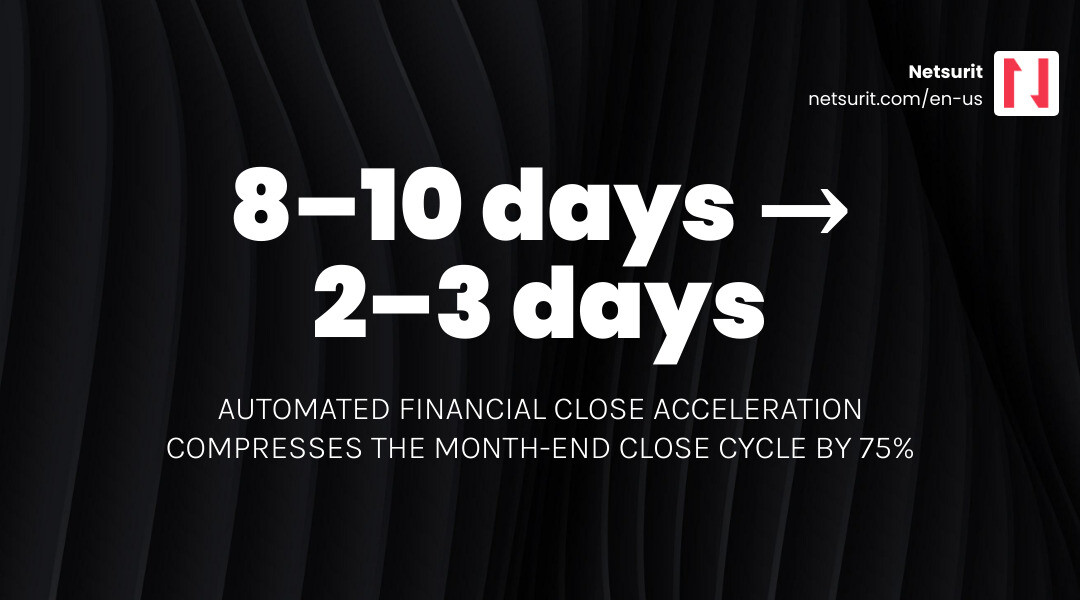
Automated financial close acceleration is the process of using AI agents, intelligent automation, and real-time ERP integration to compress the month-end close cycle from 8–10 days down to 2–3 days — with fewer errors and less manual effort.
Here is what that looks like in practice:
| Stage | Manual Close | Automated Close |
|---|---|---|
| Trial balance pull | 1–2 days (manual CSV exports) | Hours (automated ERP extraction) |
| Account reconciliation | 3–4 days (spreadsheets) | Same day (AI matching at 99.7% accuracy) |
| Flux analysis / variance narratives | 1–2 days (manual write-up) | Hours (AI-drafted, human-reviewed) |
| Journal entry preparation | 1–2 days | Overnight (AI-prepared, controller-approved) |
| Total close cycle | 8–10 business days | 2–3 business days |
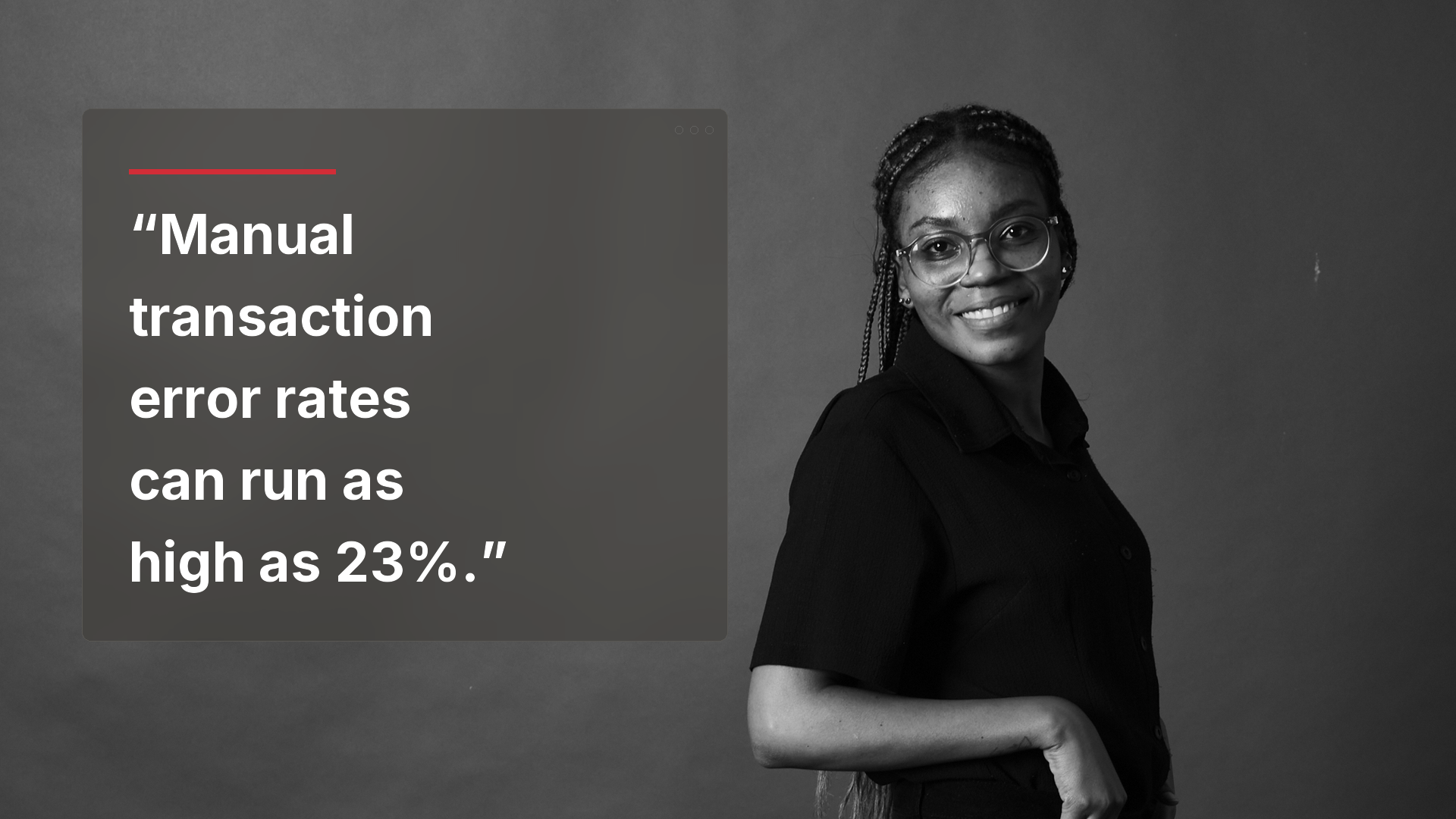
For most finance teams, the month-end close is the most exhausting stretch of the calendar. The average close consumes 120–150 manual hours, error rates on manual transactions run as high as 23%, and senior accountants routinely spend nights and weekends on reconciliations instead of strategic work. The Hackett Group benchmarks top-quartile organizations closing in 3 business days — yet the average enterprise still takes 7–10 days. That gap is not a people problem. It is a process and technology problem.
This guide walks you through exactly how to close it.
I’m Orrin Klopper, CEO and co-founder of Netsurit, a global IT services and digital transformation company that has helped more than 300 organizations modernize their financial and operational systems — including deploying automated financial close acceleration solutions across industries. My team works at the intersection of managed IT, AI, and cloud infrastructure, which gives us a clear view of where automation delivers real results and where it falls short.
Similar topics to Automated financial close acceleration:
- Automate reconciliation processes
- AI for financial statements
- Automated financial reporting AI
The Hidden Costs of Manual Month-End Processes
Relying on manual processes for your month-end close introduces significant, compounding costs. When your accounting team spends the first two weeks of every month manually pulling, cleaning, and validating data, they operate as data processors rather than strategic advisors.
The primary cost of a manual close is accuracy. Manual transaction error rates can run as high as 23%. These errors lead to post-close adjustments, restatements, and strained relationships with auditors. In July 2026, regulatory environments demand rapid, traceable reporting, making manual spreadsheets a major liability.
Employee burnout is another severe consequence. Accounting departments often experience high turnover because staff must regularly work late nights to meet close deadlines. This turnover degrades institutional knowledge and creates a constant cycle of recruitment and training costs.
Consider a CPA firm in Sugar Land, Texas, managing books for multiple local retail and dental practices. During month-end, their senior accountants spend up to 15 hours per client manually matching credit card statements to point-of-sale systems. A single mismatched transaction of $150 can halt the entire process, forcing highly paid professionals to manually review ledger lines. This operational bottleneck limits the firm’s capacity to take on new clients.
To scale efficiently, firms must transition away from these manual workflows. You can explore how modernizing your systems reduces these operational friction points by reading our guide on Digital Finance Transformation. Moving from chaotic, spreadsheet-based workflows to structured systems is covered in detail in From Chaos to Clarity: Mastering Streamlined Accounting.
Step-by-Step Blueprint for Automated Financial Close Acceleration
Achieving close cycle compression requires a systematic approach to automation. You cannot simply install an AI tool and expect an instant two-day close. You must connect your systems, deploy targeted AI agents, and establish continuous data validation workflows.
Let us look at a multi-entity manufacturing and distribution company based in Katy, Texas. This company must consolidate financial data from three separate warehouses, each operating on a slightly different inventory tracking system. In a manual setup, the close takes 11 business days because the parent entity must wait for each warehouse to close its local books, export CSV files, and manually reconcile intercompany transactions.
By automating this sequence, the Katy firm runs bank reconciliations and intercompany matching in parallel throughout the month, reducing their total close time to just 2.5 days.
To begin this transition, you must automate your foundational transaction matching. Learn how to eliminate manual spreadsheet work with our guide on No More Manual Matching: A Guide to Automated Reconciliation. For a broader perspective on how AI generates financial outputs, consult our A-Z Guide to Automated Financial Reporting with AI.
Below is the step-by-step blueprint to achieve this level of acceleration.
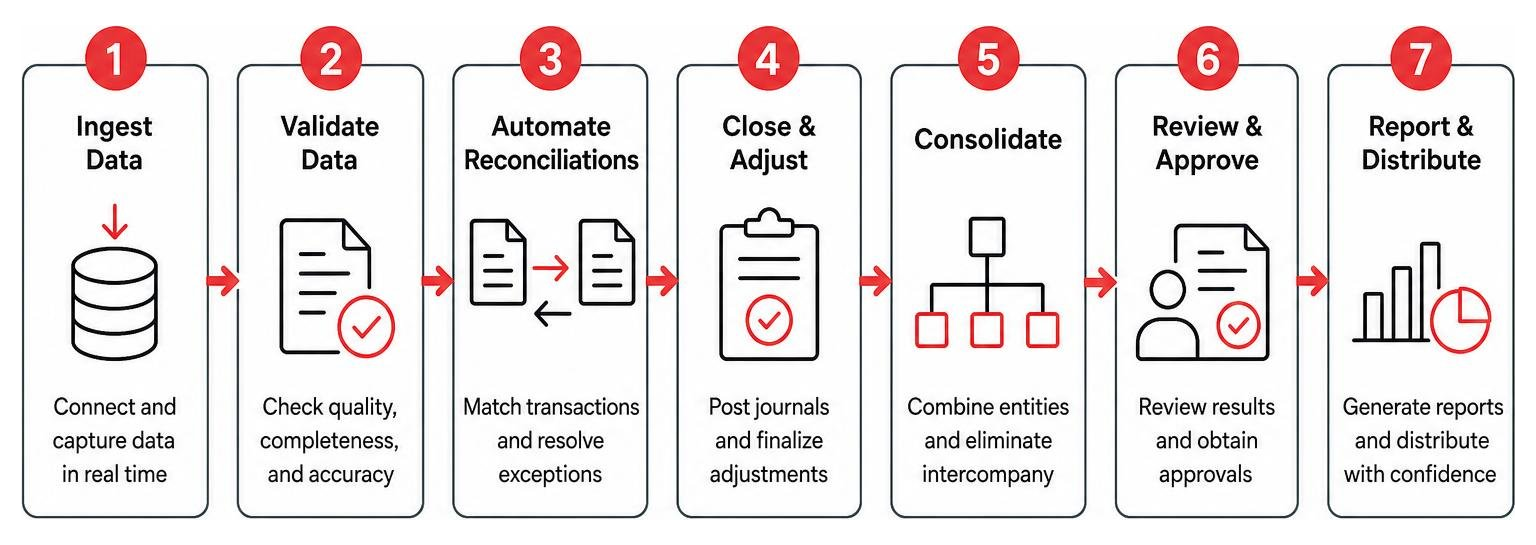
Step 1: Establish Real-Time ERP Connectivity and Data Ingestion
The first technical bottleneck in any financial close is data extraction. If your team is manually downloading CSV files from your ERP, sub-ledgers, and bank portals, you are introducing delay and risk on Day 1.
Modern automated close platforms use secure APIs to connect directly to your ERP, whether you run Microsoft Dynamics 365 Business Central, NetSuite, or SAP. This API connection allows the system to pull trial balances and sub-ledger data automatically the moment a period ends, eliminating manual file preparation.
The primary challenge at this stage is data mapping. Disparate systems often format account codes, dates, and entity identifiers differently, which can cause system errors during consolidation. Resolving these mapping issues requires establishing a clear data governance framework and utilizing intelligent middleware that standardizes data formats automatically before ingestion.
Step 2: Deploy AI Agents for Automated Financial Close Acceleration
Once your systems are connected, you can deploy autonomous AI agents to handle repetitive, high-volume tasks. These agents run continuously in the background, executing workflows before your team even logs in.
These specialized agents perform several key tasks:
- Autonomous Background Preparation: The agent extracts transaction data, identifies matching pairs, and organizes supporting documentation overnight.
- Automated Bank Reconciliation: AI-powered reconciliation tools achieve match rates of up to 99.7% by using fuzzy logic to match transactions across bank statements and general ledgers, even when dates or descriptions differ slightly.
- Accrual Identification: The agent scans open purchase orders, contracts, and historical spending patterns to identify missing accruals and draft the corresponding journal entries.
- Journal Entry Drafting: Instead of accountants manually typing entries, the agent prepares the entries and routes them to the controller’s approval queue.
To see how these specialized agents operate, you can review the capabilities of the Month-End Close Agent: Automated Financial Close | Nanonets | Nanonets . For mid-market organizations looking for tailored close orchestration, Maximor’s Automated Month-End Close Software provides a structured platform to deploy these agents safely.
Step 3: Execute Continuous Reconciliation and Flux Analysis
The traditional close model relies on batch processing, where transactions are accumulated and reconciled only after the period ends. This creates a massive workload spike at month-end.
In contrast, a continuous close model uses AI to process and reconcile transactions daily. By distributing the workload evenly throughout the month, month-end becomes a final validation step rather than a manual build.
When the period ends, the AI agent automatically runs flux analysis, comparing current-period balances against the prior period and the budget. It then drafts variance narratives for any balances that exceed your pre-defined materiality thresholds.
Organizations can implement this continuous approach using platforms like the Make your on-demand financial close vision a reality | Genpact program. To ensure these automated workflows maintain strict control and precision, enterprise teams often implement Trintech’s AI Financial Close Solution | Trintech .
Agentic Performance Management vs. Traditional ERP Close Tools
Many finance leaders believe their existing ERP or close management software can handle automation. However, there is a fundamental difference between storing data, tracking tasks, and actually executing the close work.
A construction services company in Conroe, Texas, recently faced this issue. They used a popular cloud-based task management tool to track their close checklist. While the tool showed who was responsible for each task, it could not perform the work. Accountants still had to manually export data from their project management system, reconcile subcontractor invoices in spreadsheets, and manually upload the journal entries back into their ERP. The “automation” was merely a digital checklist.
To solve this execution gap, organizations are adopting Agentic Performance Management (APM). APM introduces an active execution layer that sits on top of your ERP and close software, using AI agents to perform the reconciliations, draft the journals, and write the variance explanations automatically.
To understand how these systems compare, look at the table below:
| Capability | Traditional ERP | Close Management Software | Agentic Performance Management (APM) |
|---|---|---|---|
| Primary Function | System of record (stores transactional data) | System of visibility (tracks tasks and deadlines) | System of execution (performs the actual close tasks) |
| Data Processing | Batch processing at period-end | Relies on manual imports and manual updates | Real-time, continuous data ingestion and validation |
| Reconciliation | Basic rule-based auto-matching | Manual matching with spreadsheet uploads | AI-driven matching at 99.7% accuracy with fuzzy logic |
| Work Execution | None (requires manual user input) | None (users must complete tasks outside the tool) | Autonomous agents draft journals, run flux, and flag anomalies |
| Audit Trail | Transaction logs only | Task completion timestamps | Complete, traceable decision paths and prompt histories |
To bridge this execution gap, companies deploy dedicated agents like the Financial close agent , which automates the actual mechanics of the close sequence. For teams looking to layer intelligent automation over their existing systems without a complex IT overhaul, Financial Close Automation | AI Ops by Varyence offers a secure, non-disruptive integration path.
Why Traditional ERPs and Task Managers Fall Short
Traditional ERPs are designed to capture and store transactions, not to orchestrate complex, multi-system workflows. They lack the native ability to connect to external bank APIs, parse unstructured invoices, or write narrative explanations.
Task managers provide visibility, but they do not reduce the manual labor. They still require human accountants to perform the line-by-line matching, leaving your team vulnerable to data silos and manual transaction errors.
How Agentic Performance Management Drives Automated Financial Close Acceleration
Agentic Performance Management platforms — such as Nominal, Consark, and Aico — close this execution gap by working at the journal entry level. Instead of analyzing summarized account balances, AI agents review individual ledger lines to catch granular errors and anomalies.
APM platforms also automate complex multi-entity consolidations and multi-currency translations. The system automatically applies end-of-period exchange rates, executes intercompany eliminations, and drafts the consolidation journals, reducing a process that typically takes days down to minutes.
Overcoming Implementation Challenges and Measuring ROI
Transitioning to an automated close requires careful planning around data quality and change management. Many finance teams resist automation because they do not trust AI to handle sensitive financial data. Bridging this trust gap requires maintaining human-in-the-loop controls, where AI agents only suggest actions and human professionals retain sole authority to approve and post them.
Consider an oilfield services provider in the Houston Energy Corridor. When they first introduced close automation, their ERP data was disorganized, featuring duplicate vendor profiles and inconsistent account codes.
Rather than pausing the project for a lengthy data-cleaning initiative, they deployed an automation platform with an integrated data-normalization layer. This layer cleaned and mapped the incoming data in real time, allowing the company to compress its close cycle from 12 days to 3 days within two months of implementation.
The financial return on this investment is clear. According to PwC, close cycle compression can lead to a 15% to 25% reduction in finance close labor costs per period. Additionally, closing your books faster allows your leadership team to make critical strategic decisions based on current data rather than two-week-old historical records.
To maximize these returns, you must design your workflows for maximum efficiency. Explore practical steps to streamline your accounting operations in Improve Accounting Efficiency. For enterprise-grade strategies on connecting your financial systems, read the Oracle guide on Accelerating an Automated, Connected Financial Close .
To help you evaluate if close automation is right for your organization, review the trade-offs below:
Trade-offs: Financial Close Automation
- Works best when: Your organization has high transaction volumes, multi-entity consolidation needs, or standardized accounting policies.
- Avoid when: Your financial processes change weekly, or your leadership is unwilling to define clear materiality thresholds and approval workflows.
- Risks: Alert fatigue from overly sensitive anomaly detection, or data mapping errors from poorly configured API connectors.
- Mitigations: Establish realistic materiality thresholds, implement robust data validation rules during setup, and partner with an experienced IT provider to manage your system integrations.
Frequently Asked Questions About Close Automation
How do AI agents maintain SOX compliance and segregation of duties?
AI agents maintain strict compliance by operating purely as preparers, never as posters. The agent compiles the data, executes the reconciliation, and drafts the journal entry, but the output is routed to a secure approval queue.
Only an authorized human controller can review and post the entry to the general ledger. Furthermore, modern automation platforms generate immutable, read-only audit trails that document every data source, system match, and human approval, providing auditors with complete transparency.
What is the difference between RPA and intelligent process automation (IPA) in a financial close?
Robotic Process Automation (RPA) relies on static, rule-based scripts to move data between systems. If a bank statement format changes by a single column, the RPA script breaks.
Intelligent Process Automation (IPA) combines RPA with machine learning and natural language processing. IPA systems can read unstructured documents, adapt to minor formatting changes, recommend new matching rules, and dynamically update your close calendar based on task dependencies.
How does a continuous close model impact the finance team’s workload?
A continuous close model eliminates the intense workload spike typically experienced during the first week of the month. By automating transaction matching, bank reconciliations, and intercompany eliminations daily, the team’s workload is distributed evenly. This transition frees up senior accountants to focus on strategic variance analysis, tax planning, and business partnership throughout the month.
Conclusion
Automating your financial close is no longer a luxury reserved for the largest corporations. In July 2026, compressing your close cycle to 2–3 days is a strategic necessity that reduces errors, prevents employee burnout, and provides your leadership team with the real-time insights needed to navigate changing markets.
At Netsurit, we act as an elite technology partner, providing managed IT, cybersecurity, and AI solutions to eliminate operational downtime and unlock business momentum. Whether you operate in Houston, Sugar Land, Katy, or Conroe, we can help you design, secure, and maintain the modern IT infrastructure required to support automated close solutions.
Ready to accelerate your financial close and streamline your accounting operations? Book a consultation with our experts by visiting Netsurit Accounting Firm IT Services.