Shadow AI at AI Expo Africa 2026 and What It Tells Us About How People Work
Voted the top talk at AI Expo Africa 2026, Dr Jan van Niekerk’s session explored what shadow AI reveals about how employees work and what leaders can do in the first 90 days.

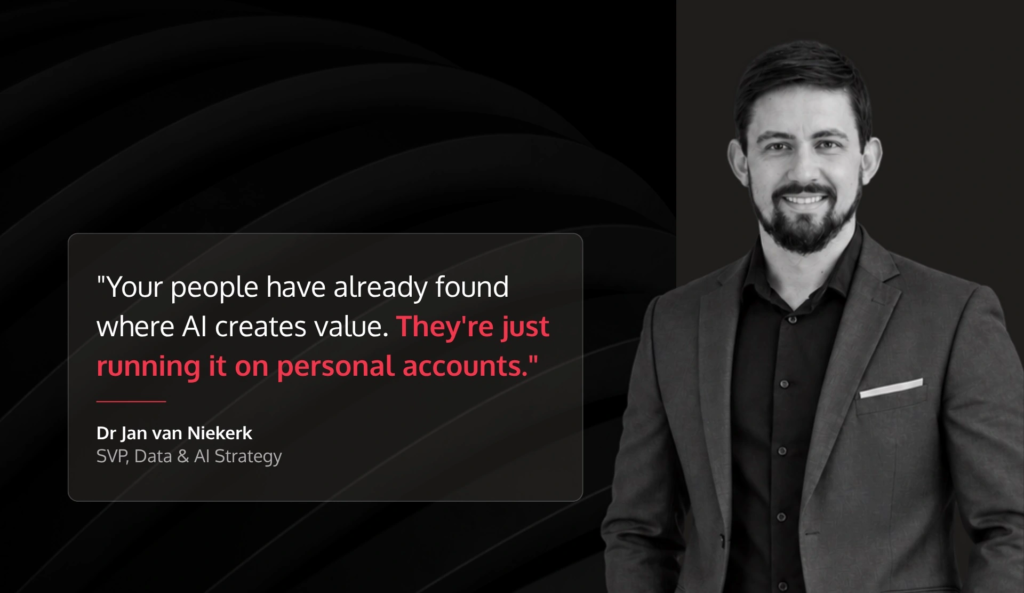
Shadow AI is any use of Artificial Intelligence (AI) at work that an organisation has not approved, cannot see or cannot govern. At AI Expo Africa 2026, Netsurit’s Dr Jan van Niekerk argued that this activity tells leaders where employees need better tools. His advice was to find out how people already use AI, decide which tasks are worth supporting, and give staff an approved way to do that work with clear rules for data and human review.
Dr van Niekerk, Netsurit’s Senior Vice President of Data and AI Strategy, presented on the main stage at the Sandton Convention Centre in Johannesburg during the 28–29 October expo. His talk, “Shadow AI is not the problem. Your response to it is.”, was voted the best session by more than 1,900 delegates.
At a Glance
- Shadow AI shows where employees have already found a use for AI and where approved tools or processes may be falling short.
- AI governance has to cover the data people put into tools and the accuracy of the work that comes back.
- In the first 90 days, leadership can map current use, publish a one-page policy and test an approved workflow against a business measure.
What a Show of Hands Revealed About Shadow AI
Dr van Niekerk opened by asking delegates to raise a hand if anyone in their organisation had used ChatGPT, Claude, Gemini or Copilot for work that week. Every hand went up. He then asked people to keep their hands up if they knew which tool was used, whether it was on a company or personal account, what their AI policy said, whether the tool was approved, what data went in and whether somebody checked what came back. By the sixth question, almost every hand was down.
A company might have approved a tool and still have little idea how people use it. An employee can open the same chatbot with a personal login. A meeting assistant can start generating summaries inside software the company already pays for. An AI agent can connect to files or email and act using an employee’s permissions. Each example raises a different question about what the organisation can see and control.
For leadership teams, Dr van Niekerk narrowed the exercise to three questions. Do we have an AI strategy? Do we have an AI policy that staff understand and can follow? Do we know which AI tools our people are using? Put those questions to the same people in the same room and it becomes easier to see where a decision is overdue and who should own it.
The Risk Runs in Both Directions
The first risk is what leaves the organisation. An employee trying to summarise a contract or draft a customer response may paste confidential information into a public tool. A consumer account can have different terms for data retention and model training from an enterprise account. The same tool name can therefore mean different things for the organisation’s data.
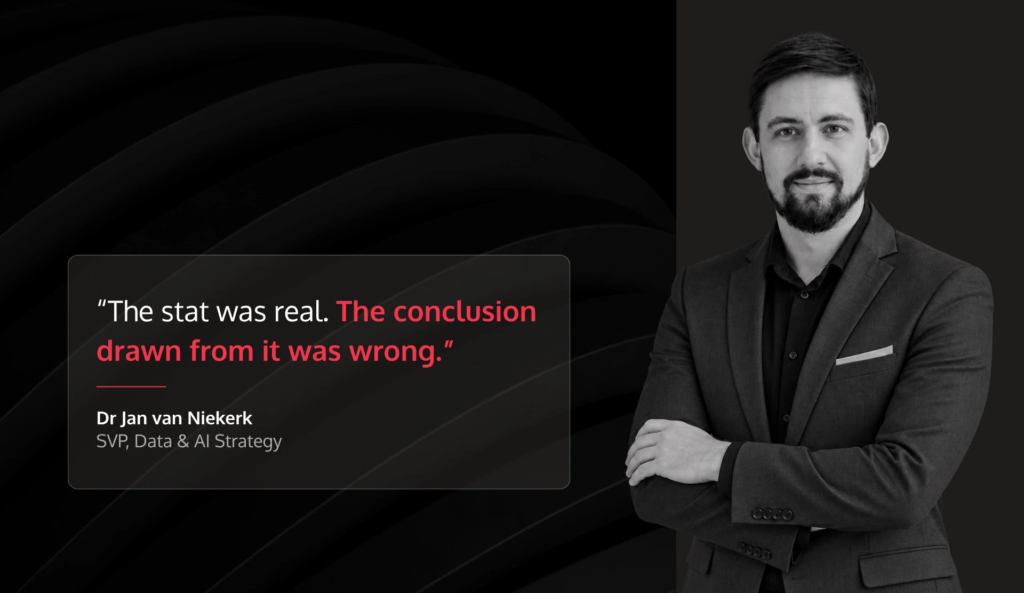
The second risk is what comes back. A convincing draft can carry a source that does not exist, a figure that does not match the underlying data or a summary that misstates a decision. Dr van Niekerk pointed to South African court papers containing fictitious citations, a Cabinet-approved Home Affairs White Paper that the department flagged over apparent AI-generated references, and an Australian government report for which Deloitte agreed to repay the final instalment after citation errors came to light.
These examples matter even when an approved tool is used. A data rule can tell an employee whether they may upload a document. A review rule tells them who must check the claims in the resulting draft before it goes to a client, a court or a regulator. Where the output includes a citation or quotation, review means going back to the original source.
Why Blanket Bans and Unrestricted Access Both Fall Short
A blanket ban can drive use to personal accounts and devices while leaving the underlying work untouched. If an employee has found a faster way to work through a backlog, the incentive to keep using it remains. The organisation then has less visibility into which tools are in use and what information employees share with them.
Unrestricted access creates a different problem. Teams can buy overlapping subscriptions, give tools access to company data and start using AI output in business processes without anyone taking responsibility for the result. When several tools do much the same job, it becomes difficult to tell which ones are worth paying for or which workflows should be rolled out more widely.
Dr van Niekerk cited Samsung and JPMorgan as examples of companies that moved from restrictions to controlled access. He also pointed to Standard Bank Group, which reported that 72% of employees were active users of generative AI tools by the end of June 2026, with 87 use cases approved. The bank’s approved tools were assessed for security, privacy and responsible use.
How to Put AI Governance into Practice in 90 Days
Dr van Niekerk set out three steps in order. See how AI is already being used. Decide where it can improve the way the business works. Then put a policy and approved tools in place so staff can use AI within those rules. The first phase can start with a named owner, a leadership decision and time set aside to do the work.
Days 1 to 30: Find Out What People Already Use
Give employees a 30-day window to disclose the tools they use and explain what they use them for. Ask which accounts they work from, what information they put into the tools and where the output ends up. Compare those answers with what IT can already see through company systems. Suspected exposure of sensitive data still goes through the organisation’s usual incident process.
Use what comes back to identify recurring tasks. A service team might already be using AI to categorise support tickets, while another team uses it to draft documentation. The team that does the work can help explain where time is lost and which steps need a person’s judgement. That gives leadership a basis for choosing the first use cases and assigning an owner to each.
Days 31 to 60: Publish the Policy and Test an Approved Workflow
Make the policy short enough to use during the working day. Name the approved tools, explain which data can go into them, set out when staff must disclose AI use and say who signs off on work that leaves the organisation. Give employees one person or channel to go to when a new use case falls outside the policy.
Choose one workflow to test and measure it before introducing AI. For example, a service desk could record how long it takes to triage a ticket, how often tickets are assigned to the wrong team and how much rework follows. Those figures give the business a starting point for judging whether the approved workflow is an improvement.
Netsurit’s guide to introducing AI into existing workflows
Days 61 to 90: Track Adoption and Put the Time Saved to Work
Keep a register of the tools and workflows in use, with a named owner and a review date for each. Check whether employees are moving to the approved tools and ask what is getting in their way if they continue to use personal accounts. An approved tool has to be good enough for the task and easy enough to access during a normal working day.
“Hours saved is a vanity metric unless the capacity is redeployed,” Dr van Niekerk told delegates. If ticket triage takes less time, the service desk can agree to spend those hours on older cases or recurring problems and then track what changes. The result belongs in the operating review alongside adoption and quality.
How Netsurit Applied the Approach Internally
Netsurit began by deciding where AI could help its own teams, including ticket triage, documentation, security checks and answering internal HR policy questions. It then developed a one-page policy for 470 people, drew up a roadmap and selected the use cases it wanted to pursue. The choice of platform followed those decisions.
Staff received training, general-purpose AI tools were kept away from production data, and a person was responsible for reviewing every client-facing message. The teams doing the work helped identify the first opportunities. Each use case had an owner and a way to measure results, giving Netsurit a basis for deciding which applications to expand.
Frequently Asked Questions About Shadow AI
What is an example of shadow AI at work?
An employee using a personal chatbot account to summarise a company document is one example. So is an AI meeting assistant that a team enables inside an approved application without the organisation reviewing what it records, where transcripts are stored or who can access them.
How can a business find out which AI tools employees are using?
Ask employees what tools they use, which accounts they use them on and what work they do with them. Compare those answers with available IT and account records. Include AI features inside software the company has already approved, because a new feature may have been enabled since the software was first reviewed.
What should a one-page AI policy cover?
It should say which tools employees may use, what data they can share, when they must disclose AI assistance and who reviews the output. It should also name a contact for questions or exceptions. A short example drawn from employees’ daily work can make the rules easier to apply.
Who should verify AI-generated work?
The person accountable for the final document or decision should make sure the output has been checked. For work involving specialist judgement, such as legal, financial or technical advice, the reviewer should have the expertise to verify the underlying claims and sources.
What Leadership Should Ask for Now
Dr van Niekerk closed with three things for leadership teams to ask for in one room. An AI strategy should say where the business expects measurable value. An AI policy should tell employees what they can do on an ordinary working day. An approved AI platform should give them a practical way to do it. The first conversation can start with one task staff are already doing with AI and one person willing to own the outcome.