Why Manual Bookkeeping Is Costing Your Firm More Than You Think
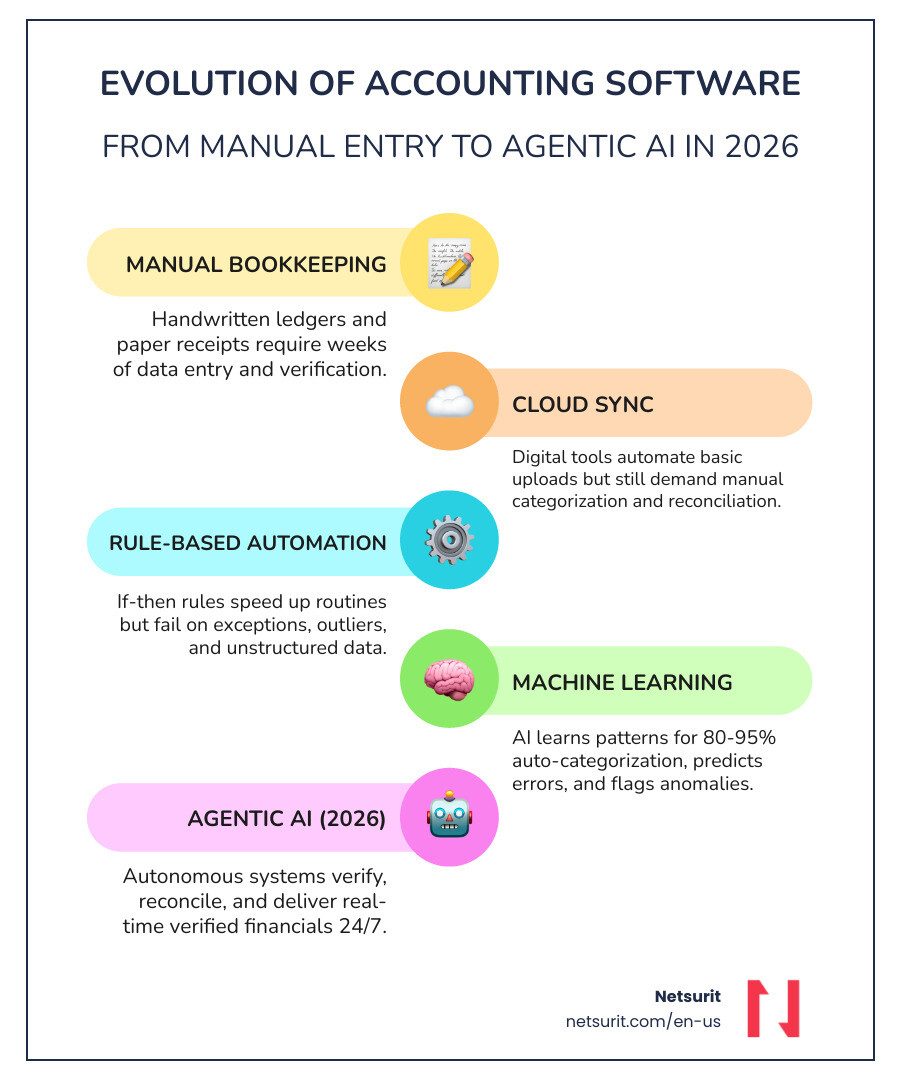
Artificial intelligence accounting software is replacing legacy cloud tools as the default standard for firms that need accurate, real-time financials without the month-end grind.
If you’re evaluating your options, here are the leading platforms to consider in 2026:
| Platform | Best For | Key Strength |
|---|---|---|
| Digits | SMBs needing real-time books | 95%+ auto-booking on $875B in training data |
| Trullion | Audit and compliance teams | Auditable, traceable AI outputs |
| xBav.ai | High-volume CPA firms | Voice-powered entry, 99% accuracy |
| Maxima | Enterprise financial close | Up to 80% reduction in days to close |
| Microsoft Dynamics 365 Business Central | Microsoft ecosystem users | Copilot-powered conversational ERP |
| Centinel | Teams needing fast deployment | Live in two weeks, no ERP migration |
The problem isn’t that accounting software stopped working. It’s that it never kept up with the pace of modern business.
Consider this: 50% of finance leaders still make decisions based on gut instinct — not because data doesn’t exist, but because it’s locked in silos they can’t access quickly enough. Meanwhile, firms using substantial intelligent automation close their books in six days or less. Firms using minimal automation? Only 23% hit that mark.
The gap is widening fast. By April 2026, agentic AI systems — platforms that don’t just record transactions but verify, categorize, and reconcile them autonomously — have moved from pilot programs to production environments at firms of every size.
This isn’t about replacing your accountants. It’s about eliminating the work that keeps them from doing what they’re actually good at.
I’m Orrin Klopper, CEO and co-founder of Netsurit, and over nearly three decades of helping businesses modernize their IT and digital operations, I’ve seen how artificial intelligence accounting software is reshaping the way finance teams operate, from automating repetitive close tasks to enabling real strategic decision-making. The platforms and frameworks in this guide reflect what’s actually working for firms navigating that shift right now.
Beyond Automation: Why Artificial Intelligence Accounting Software is the New Standard
Traditional accounting software functions like a digital filing cabinet. It records what happened, but it requires a human to do the heavy lifting of sorting, labeling, and verifying every receipt and invoice. Artificial intelligence accounting software flips this model. By utilizing machine learning, natural language processing (NLP), and agentic systems, these platforms act as a “living” general ledger that verifies data as it flows into the system.
The shift to an Agentic General Ledger means the system doesn’t just wait for you to click “reconcile.” It proactively identifies patterns, surfaces outlier transactions that signal fraud, and suggests journal entries based on historical context. This moves your team from reactive data entry to proactive AI-driven business growth.
The “So What?”: Traditional software tells you that you spent money three weeks ago. AI-native software predicts you will overspend your budget next week and flags a duplicate vendor payment before the check clears.
Houston Example: A tax firm in Katy recently replaced manual categorization with an agentic ledger. This allowed their staff to pivot from basic data entry to providing high-value advisory services for local oil and gas clients who needed complex depletion allowance strategies rather than just organized receipts.
| Trade-offs Box | |
|---|---|
| Works best when: | Transaction volume exceeds 1,000 per month and data sources (banks, CC, invoices) are fully digitized. |
| Avoid when: | Books are managed strictly on a cash basis with high volumes of physical, non-digitized paper receipts. |
| Risks: | “Set it and forget it” mentality leading to auto-categorization errors without human oversight. |
| Mitigations: | Implement “structured oversight” where AI handles 95% of tasks, but humans must sign off on any transaction over a specific dollar threshold. |
As noted in the Tacoma News Tribune, AI is not just a tool; it is a fundamental transformation in how financial assurance is delivered.
Slash Month-End Delays with Agentic Financial Close Platforms
The “month-end close” has historically been a period of high stress and late nights. Platforms like Maxima are changing this by automating the repetitive manual prep for journal entries and reconciliations. With the ability to achieve up to an 80% reduction in days to close, these tools allow finance teams to operate in a state of automated reconciliation.
These platforms use predictive journal entries to draft recurring accruals and intercompany eliminations automatically. Instead of hunting down a missing $500 variance across twelve entities, the AI flags the discrepancy in real-time.
The “So What?”: Closing the books in two days instead of ten allows leadership to make capital allocation decisions based on current reality. If you know your exact cash position on the 2nd of the month, you can invest in new equipment or headcount a full week earlier than your competitors.
Houston Example: A manufacturing company in Sugar Land utilized Maxima to automate 98% of their repetitive tasks. They reduced their days-to-close from nine to just under three, giving their CFO more time to focus on supply chain financing instead of chasing down bank statements.
What to watch next: We are moving toward “Continuous Close” models. By 2027, the concept of a “month-end” will likely disappear for leading firms, replaced by a 24/7 live, audit-ready balance sheet.
Top Artificial Intelligence Accounting Software Solutions for 2026
Choosing the right platform depends on your firm’s specific bottlenecks. Whether you are focused on reducing manual data entry or enhancing internal audits, there is a specialized solution available.
Digits: The Agentic General Ledger for Real-Time Insights
Digits is designed for SMBs that need an always-on financial picture. Their AI models are trained on over $875 billion in real SMB transactions, allowing the platform to auto-book 95%+ of transactions in real time.
The “So What?”: Digits uses purpose-trained models that understand the nuances of small business spending. This context-aware AI outperforms general-purpose LLMs like GPT-4o, which often struggle with specific G/L coding logic.
Trullion: Auditable AI for Compliance and Audit Teams
For firms that prioritize transparency, Trullion is the gold standard. It unifies structured data (ERP) with unstructured data (leases, contracts) to ensure financial assurance.
The “So What?”: Trullion provides a “knowledge layer” that links every AI-generated entry back to the source document. If the AI suggests a lease adjustment, you can click a link to see the exact paragraph in the contract that triggered it. This makes it a favorite for firms dealing with ASC 842 compliance.
xBav.ai: Voice-Powered Data Entry for High-Volume Firms
xBav.ai stands out with its voice-command capabilities and 99% accuracy in document-to-ledger processing. It is built specifically for CPA firms that need to scale without adding massive overhead.
The “So What?”: By turning mountains of documents into tax-ready financials in seconds, xBav.ai allows firms to handle roughly 40% more clients with the same staff. It’s about improving accounting efficiency through high-speed categorization.
Microsoft Dynamics 365 Business Central: Enterprise-Grade AI
For those already using Microsoft 365, Business Central offers deep Copilot integration. It moves beyond simple automation to offer predictive insights on inventory and cash flow.
The “So What?”: Copilot turns your ERP into a conversational advisor. You can ask, “Show me all invoices over $10k from last month,” and it will generate the list instantly. It also helps simplify regulatory reporting by drafting narratives for flux analysis.
Secure Your Ledger: Trust and Compliance in the AI Era
Adopting artificial intelligence accounting software requires a rigorous approach to security. You cannot feed sensitive financial data into a “black box” without knowing where that data lives or how it is protected. Leading platforms like Centinel prioritize SOC 2 Type II compliance and bank-level encryption.
One of the biggest risks in modern finance is data siloing. When data is fragmented, 50% of leaders revert to gut instinct. AI solves this by creating a unified data model, but only if the underlying IT infrastructure is secure. We often help firms in the Houston and Sugar Land areas implement “Financial Data Lakes” to ensure their AI tools have a single source of truth.
The “So What?”: AI is only as good as the data it can access. If your AI is reading incorrect data from a siloed spreadsheet, it will give you a “hallucinated” financial report. Security and data integrity are the two sides of the same coin.
Houston Example: A Conroe-based CPA firm consolidated reporting across 12 different entities into a secured data environment. This ensured that their AI-driven flux analysis was grounded in reality, preventing the “gut-instinct” errors that previously led to budget overruns.
Frequently Asked Questions about AI in Accounting
Will AI replace human accountants by 2030?
No. AI is designed to replace the “grind”—the repetitive data entry and manual matching that leads to burnout. By 2030, the accountant’s role will shift almost entirely toward strategic advisory, fraud investigation, and complex tax planning. You can read more about this transition in our guide: AI, Accountants, and the Death of Quick Fix.
How long does it take to implement artificial intelligence accounting software?
Implementation speed has improved dramatically. Modern platforms like Centinel can be live in two weeks. They typically spend the first 14 days learning your G/L structure and business rules, then connect to your ERP to start delivering results by the end of the month.
Is my financial data safe in an AI-native platform?
Yes, provided you choose enterprise-grade solutions. Leading 2026 platforms use per-organization envelope encryption and are SOC 1 and SOC 2 Type II certified. They also adhere to SEC rules for financial firms regarding data privacy and auditable trails.
Conclusion
The shift to AI-native accounting is no longer a luxury for the “Big 4” firms; it is a requirement for operational survival in a market where speed and accuracy are non-negotiable. Whether you are a small firm in Katy or a large enterprise in Houston, the goal is the same: move from being a historian of past transactions to a navigator of future growth.
Netsurit provides the managed IT and AI expertise to help your firm navigate this digital transformation without disrupting your current operations. We ensure your data is secure, your systems are integrated, and your team is ready to work smarter.
Next Action: Secure your financial data and prepare for automation by reviewing our New Jersey Cyber Security Services.